
Hooks for Reels and TikTok: 20 structures that stop the scroll
November 5, 2026 · 17 min read
The best hooks for Reels and TikTok do one thing in the first second or two: they show the viewer why the next 30 seconds are worth it. Not with a greeting, a logo or "wait for it", but with the result, the consequence, the question or the conflict that the rest of the video pays off. A strong hook is three hooks at once: the words you say, the words on screen and the first picture, all making the same promise.
Both platforms say the opening matters. TikTok's Creator Academy tells creators to hook viewers within the first 3 seconds. Instagram's ranking documentation for Reels lists, among its predictions, how likely you are to watch less than three seconds of a reel, and its Insights now show a skip rate for exactly that window. What they do not publish is a formula, which is why most hook advice online is a list of templates with no way to test them.
This guide gives you 20 hook structures with a worked example for each, written so they work for faceless and code-drawn videos as well as for creators on camera. Then it covers how to read your analytics to tell a weak hook from a weak middle, which hooks cross the line into bait that both apps downrank, and a four-week plan for testing hooks properly.
What a hook is, and what it is not
A hook is a promise plus a reason to believe it. "The Titanic was not sunk by one big hole" promises an explanation and signals that the common story is wrong. A viewer who cares even slightly about the topic now has a question in their head, and the only way to close it is to keep watching.
A hook is not an introduction. "Hey guys, today I want to talk about the Titanic" spends two seconds saying nothing will happen yet. It is not a logo sting, a slow zoom on a title card, or a countdown. And it is not a lie: a hook that promises something the video does not deliver gets a click and then a swipe, and on both apps the swipe is what gets measured.
The useful mental model is that the viewer is already halfway out. Their thumb is moving. Your first frame is the only part of the video they are guaranteed to see, so it has to carry the whole pitch.
What Instagram and TikTok actually say about the first seconds
It is worth separating what the platforms have said from what marketers have extrapolated.
TikTok's "8 tips for becoming a successful TikTok creator" article is direct: "It's important to hook your viewers within the first 3 seconds." It suggests introducing a question you will answer in the video, setting a timer or including the time in the title, or starting with a quick tease of the end result. The same article recommends fast-paced storytelling and quick cuts, and to "snip out the boring parts to help increase your watch time." Its posting routine article sums up a structure in five words: hook, go in-depth, call to action.
Instagram's creator guidance says to make the first 3 seconds of a reel engaging, and its August 2026 video tips tell creators to open with the moment that makes someone stop scrolling, add on-screen text for people watching without sound, and read early drop-off as a hook problem. Its Reels system card, updated in November 2025, lists the likelihood of watching less than three seconds as one of the predictions behind ranking, next to the likelihood of watching more of a reel than 95% of viewers do.
Those three seconds are not magic numbers in the algorithm as far as anyone outside the companies can tell. They are the window where most viewers decide. TikTok's own help page says time spent watching is weighted heavily for the For You feed, and Instagram's chief Adam Mosseri names watch time as one of the three signals that matter most. A hook is simply the cheapest place to win watch time. For the bigger picture, read how the Instagram algorithm works and how the TikTok algorithm works.
The numbers you see quoted, and what they really measure
Two statistics are quoted in nearly every hook article, and both come from advertising, not from organic posts.
The first is Meta and Nielsen's finding that up to 47% of the value of a video campaign was delivered in the first three seconds and up to 74% in the first ten. That is about paid video ads, the page carries no date (it is usually cited as 2016), and "value" there means ad outcomes like recall, not reach on a creator's reel.
The second is TikTok for Business's line that over 63% of the videos with the highest click-through rate highlight their key message or product in the first 3 seconds. That comes from a guide to auction ads, and we could only read it through a search snippet because TikTok's ads site was not reachable from our network. It is about ads people click, not organic videos people watch.
Both point in the same direction as the organic advice, so they are not useless. But if someone tells you "74% of your reel's success is decided in 10 seconds", they are stretching an ad study. The honest organic evidence is thinner: Metricool's 2026 Instagram study of 24.36 million posts found average Reel watch time was about 8.5 seconds, and Buffer's study of 1.1 million TikToks found median watch time of 3.1 seconds on 5 to 10 second videos and 11.3 seconds on videos over a minute. Most viewers see very little of most videos. The opening is the part almost everyone sees.
The three layers of a hook: spoken, written and visual
A hook works when three layers say the same thing at the same moment.
- The visual hook is the first frame. It must make sense as a still image, because many viewers see it before the video moves, and because on Instagram the first frame may also become your grid cover. Show the most interesting thing at frame zero: the result, the number, the object, the face mid-reaction.
- The written hook is the on-screen text. Large, short, and inside the safe area so the app's buttons and caption do not cover it. Many people watch muted, so for them the written hook is the only hook. Keep it to one line of four to eight words.
- The spoken hook is the first sentence of the voiceover or what you say on camera. It should start in the first half second, not after a breath or a music intro. It can be longer than the text, but it must say the same thing.
When the three layers disagree, viewers feel it as confusion and leave. The commonest version is a clever text hook over a voiceover that starts with context. Fix it by writing the spoken first line and the text hook together, then cutting both until they match. Placement rules for the text are in our safe zones and specs guide.
20 hook structures, with a worked example each
Each structure below names the mechanism, then gives an example you could adapt. The examples lean towards explainer and faceless formats because those are hardest to hook (there is no face to stop the scroll), but every structure works on camera too. Write three hooks per video from different structures and pick the strongest.
Hooks 1 to 5: lead with the outcome
- 1. Consequence first. State the result before the cause. Example: "$440 million gone in 45 minutes." The viewer immediately wants to know how. This is the opening of one of our sample videos below.
- 2. The end result as a tease. Show the finished thing for one second, then go back to the start. Example: a finished room makeover flashes on screen, then "This was the room on Monday." TikTok's own tips name this one.
- 3. The number that sounds wrong. Example: "If you get 1% better every day, you end the year 37 times better." The number creates the question ("really?") and the video answers it. Check every figure; a wrong number in a hook is a comment section full of corrections.
- 4. The before and after in one frame. Split the screen: left is the problem, right is the fixed version. Example caption: "Same photo. One setting changed." Works for edits, design, cooking, fitness form.
- 5. The timer. Put a time limit on screen. Example: "Learn the whole of compound interest in 30 seconds" with a visible countdown. TikTok suggests including the time in your title; it also tells the viewer exactly what they are committing.
Hooks 6 to 10: open a question
- 6. The myth correction. Example: "The Titanic was not sunk by one big hole." It challenges something the viewer believes, which is a stronger pull than telling them something new.
- 7. The direct question the video answers. Example: "Why does exponential growth always fool us?" Only ask a question the video genuinely answers, and answer it before the end.
- 8. The mystery object or detail. Start on a close-up of something unexplained. Example: a locked box on screen, "The lookouts on the Titanic had binoculars. Nobody had the key."
- 9. The incomplete list. Example: "Three things every Indian freelancer should do before March. The third one saves the most." The promise of the third item carries the viewer through the first two. Deliver the third.
- 10. The overheard line. Start with a quote that needs context. Example: "'Do not open the door.' That was the only text on her phone." Use real quotes with a source, or make it clear the story is fiction.
Hooks 11 to 15: create stakes
- 11. The mistake warning. Example: "Stop exporting your Reels like this." Show the mistake on screen in the first frame. It works because viewers fear doing the thing, not because the line is clever.
- 12. The second-person scenario. Example: "Imagine you wake up at 11:58 and your phone says do not open the door." The survival series format on TikTok and Shorts is built on this; the viewer is the protagonist.
- 13. The near miss. Example: "In 1983 one man decided not to start a nuclear war." A disaster that almost happened is tension without gore, which keeps it eligible for broad recommendation.
- 14. The contradiction with authority. Example: "Every fitness app says 10,000 steps. Here is where that number came from." Be careful: if you contradict official advice on health or money, your evidence has to be solid.
- 15. The cost of not knowing. Example: "This one setting is why your reels look blurry." Name a pain the viewer has felt, then promise the fix.
Hooks 16 to 20: use identity and story
- 16. The call-out. Name exactly who it is for. Example: "If you post faceless reels, this will save you an hour a week." Narrow beats broad; the right person feels addressed and the wrong person scrolls, which is fine.
- 17. The in medias res. Start in the middle of the action. Example: the first frame is already the moment the file corrupts, with "So the client is on the phone, and the file will not open."
- 18. The series number. Example: "Day 14 of explaining one famous disaster a day." A visible episode number tells new viewers there is more and gives followers a reason to come back. It pairs well with any other hook in this list.
- 19. The personal stake. Example: "I lost a client because of this one sentence in my email." Works for faceless voiceover too; a first-person narrator gives the viewer someone to follow, which is the point one X creator, kozh (@mr_kozh), makes about putting a tiny character on screen.
- 20. The visual pattern break. No words for the first second: something unexpected moves. A shape snaps into place, a stick figure falls off the frame, huge text slams in on the beat. kozh describes huge words interrupting the story at exactly the right moment as one of the decisions you have to direct yourself. Follow the break with a spoken hook from the list above.
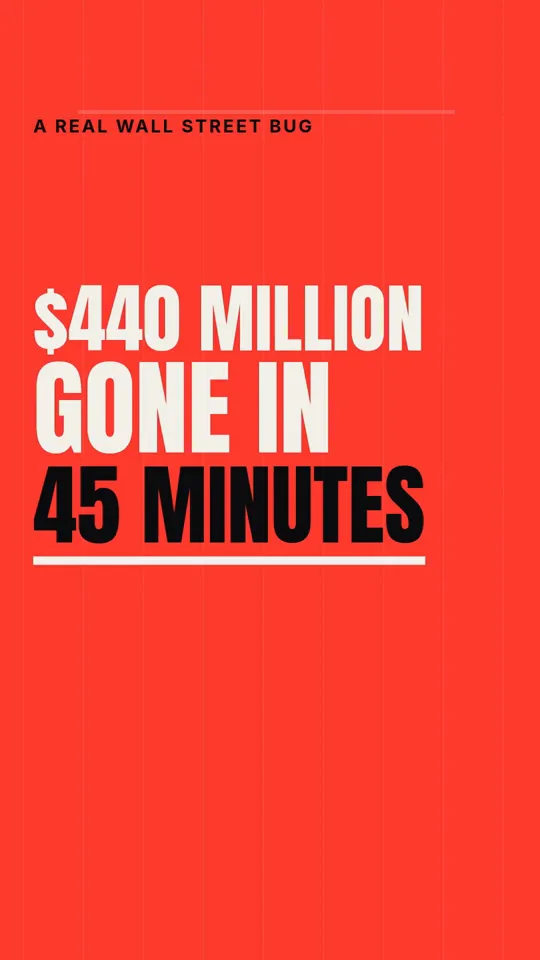
Kinetic type · 33 s
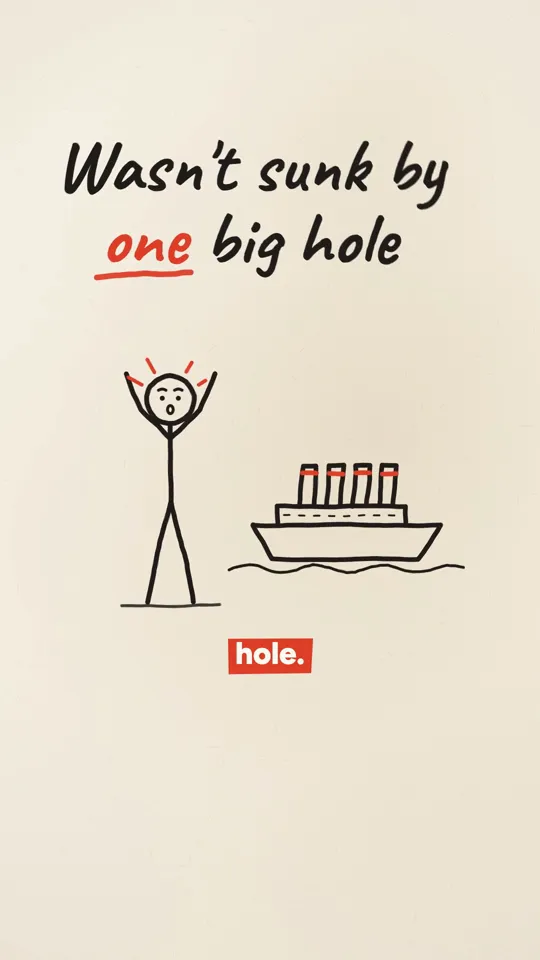
Ink stickman · 35 s
Writing hooks for faceless and code-drawn videos
Creators on camera can stop a scroll with an expression. Faceless videos cannot, so the first frame has to do the work with type, an object or motion. Three rules help.
Put the hook text on screen at frame zero, fully formed. Do not animate it in letter by letter; by the time the word lands, the viewer is gone. Animate what comes after the hook instead.
Make the first frame the most visually distinct frame of the video. If the video is a diagram, start with the curve already taking off, then rewind to explain it. If it is a stick figure story, start on the moment of action, not the character standing still.
Get the voice moving immediately. Text-to-speech intros with a half second of silence cost more than they look. Trim the head of the audio so the first syllable lands on the first frame. If you script with an AI tool, write the hook last, after you know what the video pays off; our script guide explains why. The free hook generator is a quick way to get ten options to react to.
What creators on X say about hooks (their views, labelled)
The creators publishing code-made Reels and TikToks on X in late 2026 mostly talk about structure rather than one-line hooks. Their posts are opinions and claims, not studies, but a few points recur and are useful.
Finn (@finnardley), whose stickman survival prompt is widely copied, writes the episode around opening a new question roughly every ten seconds and only answering it with a bigger one. That is the hook idea applied to the whole video: every section needs a small hook of its own.
kozh (@mr_kozh) argues the hard part is not making things move but making someone stay for the next frame, and that "make me a viral video" will not give an AI those decisions: you have to direct them. Ernesto Lopez (@ErnestoSOFTWARE) makes a similar case more bluntly, claiming that most new AI video accounts get under 1,000 views and that the ones that win are good directors who study viral videos frame by frame. The view figure is his claim, but the advice to study openings frame by frame is sound and free.
One counterweight is worth keeping. In replies to one of Ernesto's threads, a creator who ran a stickman series wrote that the views were real but did not convert well into app downloads. A hook can win attention that is worth nothing to you. Hook the viewers you actually want.
Hooks that cross the line into bait
Both platforms name certain openings as things they downrank, and some hook templates sit right on that line.
TikTok's Community Guidelines, effective 24 September 2026, say: "Content that tries to manipulate people into giving gifts or inflating likes or follows isn't eligible for the FYF." Its Creator Rewards Program also lists clickbait designed primarily to attract followers, likes or ad clicks as ineligible. Meta says it reduces the distribution of clickbait and engagement bait across Facebook and Instagram, and Instagram's Recommendations Guidelines list long captions unrelated to the content among low-quality material it avoids recommending.
- "Like this if you agree" or "Comment YES for part 2" as the hook. This is engagement bait. Earn the comment with a real question at the end instead.
- "Follow or you'll regret it" openings. They ask for the follow before giving any value.
- A thumbnail or first frame showing something the video never shows. That is clickbait by any definition, and it trains viewers to swipe on your next video.
- "Wait for the end" with nothing at the end. A real payoff is fine; an empty promise burns trust.
- Shock images unrelated to the topic to stop the scroll. Graphic or sensational content can also make a video ineligible for broad recommendation on both apps.
The test is simple: does the rest of the video deliver what the first three seconds promised, at about the intensity promised? If yes, it is a hook. If no, it is bait.
How to tell if your hook is the problem
A video that underperforms can fail in three places: the opening, the middle or the topic. The analytics on both apps can tell you which, if you look at the right chart.
| Symptom | Where to see it | Likely cause | What to change |
|---|---|---|---|
| High skip rate on Instagram | Reel insights: skip rate, the share of views skipped in the first 3 seconds | Opening frame or first line does not land | Rewrite the hook from a different structure; make frame zero stronger |
| Steep drop in the first 2 seconds on TikTok | TikTok Studio, Analytics, the video's retention curve | Same as above, or the video starts with silence or a title card | Trim the head; start voice and text on frame one |
| Low stayed-to-watch on Shorts | YouTube Studio, Analytics, Content, Shorts: stayed to watch | Viewers chose to swipe away at the start | Test a new opening on the next Short in the series |
| Good start, then a slow slide | Retention chart flattens late or drops mid-video | Hook works, middle sags | Cut the middle; add a new question every 10 seconds |
| Good retention, few views | Most views from followers, few from non-followers | Topic or packaging does not travel beyond your audience | Change the topic angle, not the hook |
Instagram replaced its view rate with skip rate in August 2025 and added a retention chart; in April 2026 its redesigned insights started showing share rate and skip rate as percentages. Lower skip rate is better. On TikTok, analytics can take one to two days to update, so judge a hook after 48 hours, not after 20 minutes.
A four-week plan to test hooks properly
Most creators never learn which hooks work for them because they change everything at once. This plan changes one thing: the hook structure.
Plan: hook testing over four weeks
SETUP    Pick ONE format and ONE length you will keep for 4 weeks.
         Pick 4 hook structures from the list (e.g. 1, 6, 12, 16).

WEEK 1   Make 4 videos, one per structure. Same format, length,
         style, posting window. Log: skip rate (IG), first-2-second
         drop (TikTok), stayed to watch (Shorts), avg watch time.

WEEK 2   Repeat with 4 new topics, same 4 structures in a new order.

WEEK 3   Drop the weakest structure. Add one new structure.
         Repeat with 4 new topics.

WEEK 4   Repeat. You now have 4 data points for the best structures.

DECIDE   Keep the 2 structures with the best average skip rate or
         retention across at least 3 videos each. Ignore any single
         outlier, good or bad.

ALWAYS   Same safe-zone text size and placement. Same voice.
         One change at a time, or you learn nothing.
On Instagram you can run this faster with trial reels, which are shown to non-followers first and report views, likes, comments and shares after about 24 hours. On TikTok, scheduling from TikTok Studio on the web (up to 30 days ahead) keeps the posting time constant so it does not muddy the comparison. The cadence side of this is covered in how often to post on Instagram and TikTok.
A hook checklist to run before you post
Checklist: before you post
[ ] Frame zero makes sense as a still and shows the payoff or the question.
[ ] On-screen hook text is visible at frame zero, 4 to 8 words, large.
[ ] Text sits inside the safe area (clear of caption and buttons).
[ ] The first spoken word lands within half a second.
[ ] Spoken, written and visual hooks make the same promise.
[ ] No greeting, logo sting, title card or "in this video".
[ ] The video delivers the promise, ideally by the 70% mark.
[ ] Every number in the hook is checked and sourced.
[ ] No "like/comment/follow for..." bait in the opening.
[ ] Watched once on a phone, sound off, then sound on.
Hooks on each app: small differences
- Instagram: the first frame doubles as a grid preview unless you pick a cover, and the profile grid shows 3:4 crops. Put the hook text in the centre third so it survives the crop. Sends drive reach to new people, so hooks that make someone think of a friend ("send this to the person who always says...") can work, as long as the video earns it.
- TikTok: search matters, so a hook that says the topic out loud doubles as a keyword. TikTok's Search guidance says to make the topic clear through the description, voiceover, captions and on-screen text. See Instagram and TikTok SEO.
- YouTube Shorts: the stayed-to-watch metric is literally a hook score. Since July 2026 Shorts can also carry a custom thumbnail, which matters on channel pages and in search rather than in the swipe feed itself.
Common hook mistakes and fixes
- Starting with context. Fix: move the most interesting sentence of the script to the top.
- A hook that is clever but vague ("This changes everything"). Fix: name the thing. Specific beats mysterious.
- Text too small or under the buttons. Fix: design to a safe box and test on a phone.
- A music intro before the voice. Fix: the voice starts on frame one; music sits underneath.
- The same hook structure on every video. Fix: rotate at least three structures so followers do not tune out the pattern.
- Hook promises a list of five and the video gives three. Fix: change the hook or the video before posting.
- Copying a viral creator's exact hook line. Fix: take the structure, write your own words. Both apps reward originality.
Putting hooks into production
Hooks get better with volume, because you only learn which structures suit your niche by testing dozens. That is why the production side matters: if one video takes a full evening, you will test four hooks a month; if it takes minutes, you can test four a week. Read how to go viral on Instagram Reels and how to go viral on TikTok for how hooks fit into the rest of a winning video.
WhatToUpload's Video Studio is built for that loop. Type a topic and it writes the script with the hook first, draws every frame as code, voices it and burns captions inside the safe zone, in about 3 minutes. Styles live today are Kinetic type, Ink stickman and Diagram explainer; see the faceless video generator, the kinetic typography maker and the free tools. Auto-posting to YouTube is live for testers, and Instagram and TikTok posting is coming, so for now you download and post. Plans are $19, $49 and $99 a month; you get 10 free credits at signup, enough to try the script tools but not a full video, and a 30 second video is 26 to 30 credits.
Sources and methodology
Platform behaviour comes from Instagram's, TikTok's and YouTube's own documentation and statements, checked in November 2026. Third-party studies are listed with their sample and method, and treated as starting points for your own testing rather than rules. Creator figures from posts on X are the creators' own claims.
- 01TikTok Creator Academy: 8 tips for becoming a successful TikTok creatorHook within the first 3 seconds; question, timer, tease of the end result.
- 02TikTok Creator Academy: building a sustainable posting routineUpdated 18 August 2026. Hook, go in-depth, call to action.
- 03TikTok Community Guidelines: integrity and authenticityEffective 24 September 2026. Engagement bait is ineligible for the For You feed.
- 04Meta Transparency Center: Instagram Reels system cardUpdated 11 November 2025. Predicts watching under three seconds.
- 05Instagram creators: helping creators of all sizes break through26 February 2025. Make the first 3 seconds engaging.
- 06Social Media Today: Instagram adds retention insights for Reels24 August 2025. Skip rate replaces view rate.
- 07Social Media Today: Instagram shares tips on video creation5 August 2026.
- 08Meta: lowering distribution of problematic contentClickbait and engagement bait. Updated 25 April 2025.
- 09Meta for Business: video ad features (Meta and Nielsen)47% and 74% figures; paid video campaigns, undated.
- 10Metricool: Instagram study 202624,364,803 posts from 375,118 accounts; average Reel watch time 8.5 seconds.
- 11Buffer: longer TikToks get more views1.1 million TikToks, 17 March 2025.
- 12kozh (@mr_kozh) on X: making someone stay for the next frame29 October 2026. Craft opinions.
- 13Finn (@finnardley) on X: stickman survival promptOctober 2026. Open a new question about every ten seconds.
- 14Ernesto Lopez (@ErnestoSOFTWARE) on X: the new moat is being a good directorOctober 2026. View figures are his claim.
Frequently asked questions
What is a good hook for a Reel or TikTok?
One that shows the payoff or opens a specific question in the first second, with the spoken line, the on-screen text and the first frame all saying the same thing. Consequence first ("$440 million gone in 45 minutes") and myth correction ("The Titanic was not sunk by one big hole") are two of the most reliable structures.
How long should a hook be?
TikTok tells creators to hook viewers within the first 3 seconds, and Instagram says the same about the first 3 seconds of a reel. In practice the on-screen text should be 4 to 8 words and the first spoken sentence should start within half a second.
What is skip rate on Instagram?
Skip rate is the percentage of views where people skipped your reel during the first 3 seconds. Instagram added it in August 2025, replacing view rate. A lower skip rate means a stronger opening.
Is it true that 74% of a video's success happens in the first 10 seconds?
That figure comes from a Meta and Nielsen study of paid video ad campaigns, not organic reels, and it measures ad value such as recall. The direction is right, but it is not a measured fact about organic reach.
Do engagement bait hooks like "comment YES" work?
They can get comments, but both apps penalise them. TikTok says content that tries to manipulate people into inflating likes or follows is not eligible for the For You feed, and Meta reduces the distribution of engagement bait.
How do I write hooks for faceless videos?
Make frame zero the most distinct frame of the video, put the full hook text on screen from the first frame, and start the voice immediately. Show the result, number or object first and explain afterwards.
How many hooks should I test?
Pick four structures and test each on at least three videos with the same format, length and posting window. Keep the two with the best skip rate or early retention.