
How often to post on Instagram and TikTok: what the studies show
November 5, 2026 · 14 min read
How often to post on Instagram: Buffer's study of 2.1 million posts from 102,000 accounts found 3 to 5 posts a week roughly doubles weekly follower growth compared with 1 to 2, and more posts keep helping with diminishing returns. How often to post on TikTok: Buffer's study of 11.4 million TikToks found views per post rise as you post more (about 17% higher at 2 to 5 a week and 34% higher at 11 or more, compared with once a week), but the typical post barely changes. What grows is your chance of a hit.
The platforms themselves give no number. TikTok's Creator Academy says your "exact posting cadence is totally up to you!" and that a steady stream of high-quality content beats rushing out daily updates. Instagram's Adam Mosseri said in September 2026 to post often enough to get more chances at a hit, but not to the point of burnout. YouTube says there is "no minimum posting cadence required" for Shorts to perform.
So the practical answer for most creators is 3 to 5 posts a week on each app you take seriously, kept up for months, rising only when you can keep quality steady. This guide shows what each study measured, why the median and the best post tell different stories, where frequency becomes a spam risk, how to read whether more posting is working, and a cadence plan sized to the time and budget you actually have.
The answer in 30 seconds
- Instagram: 3 to 5 posts a week is the evidence-backed sweet spot (Buffer). 6 or more still helps follower growth, with smaller returns per extra post.
- TikTok: 3 to 5 a week to start. More posts mainly raise the odds of a breakout; Buffer's benchmark puts the most efficient range at 8 to 20 posts a month.
- YouTube Shorts: no minimum cadence officially; Buffer suggests 1 to 3 a week as guidance, without Shorts-specific data.
- Consistency over months beats bursts: Buffer found accounts posting in 20+ of 26 weeks got about five times the engagement per post of inconsistent posters.
- Quality first: every study and every platform says the video matters more than the count. Posting more of a weak format multiplies weak results.
- The ceiling is policy, not stamina: posting or engaging at very high frequencies, automation, and near-identical mass-produced videos are all against platform rules.
What the platforms officially say
TikTok's "8 tips" Creator Academy article: "Maintaining a steady stream of high-quality content is always better than rushing to push out daily updates. While consistency is key to building a loyal viewership, your exact posting cadence is totally up to you!" Its posting-routine article (updated August 2026) adds that "consistency matters more than perfection" and that viewers connect when you post frequently. Hootsuite's guide notes TikTok has at times recommended 1 to 4 posts a day; we could not find that figure on a current TikTok page, so do not treat it as official.
Instagram: Mosseri gave no fixed number in September 2026, as reported by Social Media Today, only to post regularly enough for more chances at a hit while avoiding burnout. Instagram's February 2025 tips said each reel has the potential to reach a new audience, which is an argument for posting regularly. An old Mosseri interview from about 2021 suggested two feed posts a week and two stories a day; it predates Reels-first Instagram and is likely out of date.
YouTube's Shorts help page: "There is no minimum posting cadence required for your videos to perform well." A Shorts product lead said in 2023 that there is nothing in YouTube's systems that unlocks reach once you hit five or ten Shorts a day.
How often to post on Instagram: Buffer's 2.1 million post study
Buffer analysed 2.1 million feed posts (photos, Reels and carousels; Stories excluded) from 102,000 accounts, published August 2025. Its method compared each account with its own baseline (fixed effects), which matters: big accounts that post a lot cannot simply dominate the result.
| Posts per week | Weekly follower growth | Reach per post vs 1 to 2 a week |
|---|---|---|
| 1 to 2 | +0.12% | Baseline |
| 3 to 5 | +0.26% | About 12% higher |
| 6 to 9 | +0.44% | About 18% higher |
| 10 or more | +0.66% | About 24% higher |
Two readings. First, the jump from 1 to 2 posts to 3 to 5 more than doubles follower growth, which is why Buffer calls 3 to 5 "likely the sweet spot". Second, returns diminish: each extra post above 5 adds less. Buffer itself warns that content quality probably remains the most important factor. If posting nine times a week means each post gets worse, the study's average does not apply to you.
How often to post on TikTok: Buffer's 11.4 million TikTok study
Buffer's TikTok study (October 2025) covered 11.4 million posts from 150,000+ accounts, again comparing each account with itself. Views per post rose with frequency, compared with posting once a week: up to 17% higher at 2 to 5 posts a week, 29% at 6 to 10 and 34% at 11 or more. The detail underneath is the most useful finding in this whole topic.
| Posts per week | Median views | 90th percentile views |
|---|---|---|
| 1 | 489 | 3,722 |
| 2 to 5 | 506 | 6,983 |
| 6 to 10 | 487 | 10,092 |
| 11 or more | 459 | 14,401 |
A typical TikTok gets about 500 views whether you post once a week or every day. What changes is the ceiling: the best tenth of posts from frequent posters reach nearly four times more. Buffer's own summary: posting more helps "mostly because it increases your chances of getting lucky. TikTok is heavy-tailed." That is the honest case for frequency on TikTok. You are buying lottery tickets, and each ticket costs a video you have to make well.
Buffer's separate benchmark report (January 2026, over 1 million TikToks) puts the most efficient range at 8 to 20 posts a month, roughly 2 to 5 a week.
What brands and accounts actually post
| Source | Sample | Date | Finding |
|---|---|---|---|
| Rival IQ / Quid | 150 companies in each of 18 industries | Mar 2026 | Brands average 3.7 Instagram posts and 2.0 TikToks a week |
| Socialinsider (Instagram) | 67.5M posts, 579K brand accounts | Feb 2026 | 8 Reels, 7 images, 5 carousels a month on average in 2025; Reels output up 33% |
| Socialinsider (TikTok) | 40.7M videos, 257K brand accounts | Apr 2026 | 8 to 23 posts a month in 2025 by follower tier, up from 6 to 15 |
| Metricool (Instagram) | 24.36M posts, 375K accounts | Jun 2026 | Small accounts post 7 to 14 times a week; medium 14 to 30 |
| Hootsuite | Guidance, no sample | Apr 2025 | 3 to 5 Instagram feed posts and 2 Stories a day; 3 to 5 TikToks a week to start |
Metricool adds one counterintuitive note: among accounts with over 1 million followers, posting less often went with about six times more interactions per post. That is a correlation in a specific group (huge accounts that post rarely may post bigger, more planned pieces), not advice for a small page.
Consistency beats bursts
Buffer's consistency study followed 100,000+ users for 26 weeks (published January 2025). Those who posted in at least 20 of the 26 weeks got about five times (450% more) engagement per post than inconsistent posters, and those posting in 5 to 19 weeks got about four times more. The gain plateaued after about week 21.
The lesson is about months, not days. Ten posts in one week followed by three silent weeks is worse than three posts every week. It is also the more humane plan: the creators who grow are usually the ones who did not quit in month two. If you are just starting, our guides to warming up a new Instagram account and warming up a new TikTok account explain what the first weeks of posting should look like.
Where frequency becomes a spam risk
There is a ceiling, and it is set by policy. Meta's Spam policy bans posting or engaging "at very high frequencies", whether manual or automated. Instagram judges accounts over a rolling 30 days: since April 2026, if most of an account's posts in that window are unoriginal reels, photos or carousels it did not create or materially edit, it may stop being recommended to new audiences.
TikTok's Community Guidelines (effective 24 September 2026) "strictly prohibit automation tools, scripts, or other tricks designed to bypass our systems" and make unoriginal or reused material ineligible for the For You feed. TikTok's recommendation system also runs a similarity check that replaces near-duplicate videos in a viewer's feed. YouTube's inauthentic content policy targets "content that is repetitive or mass-produced", including AI content made with generic templates that gives the impression of mass production, and its spam policy bans using automated tools or AI to churn out high volumes of similar content.
Read together: you can post a lot, but each post has to be genuinely different. Growth threads on X describe accounts posting 20 times a day across 10 accounts, or 48 Shorts a day across four channels. Those are creators' claims about their own operations, and they sit right next to the lines above. We do not recommend copying them.
Quality versus quantity: how to tell which you need
Your analytics answer this better than any study. Compare your last 10 posts:
- If skip rate is high (Instagram Reel insights) or average watch time is low (TikTok Studio > Analytics > the video), you have a hook or format problem. Posting more will multiply it. Fix the video first; see hooks for Reels and TikTok.
- If retention is solid but views are flat, you probably need more attempts. That is where frequency helps, especially on TikTok's heavy-tailed distribution.
- If one format clearly outperforms the rest, post more of that format, not more of everything.
- If quality dropped when you raised the cadence (shorter scripts, rushed edits, recycled ideas), step back down. Buffer's own studies say quality probably matters most.
Reels, carousels and stories: what counts as a post
Buffer's Instagram frequency study counted feed posts of all types. Format matters for what each post does: Buffer's analysis of 52 million posts (August 2026) found Reels reach about 36% more people than carousels, while carousels get about 12% more engagement. Socialinsider's 2025 data found carousels highest in engagement (0.55% by followers), Reels close behind (0.52%) and images lowest (0.37%), with carousels getting the most saves.
So a sensible weekly mix for a faceless Instagram page is mostly Reels for reach, plus one or two carousels that turn your best Reel into a saveable reference. Stories are for followers: Instagram ranks them partly on how close you are to the author, so they keep your existing audience warm rather than find new people. Our faceless Instagram page guide shows a full weekly content system.
Engagement rates differ by provider definition (Socialinsider divides by followers, Emplifi by impressions, Buffer reports far higher figures), so never compare one provider's rate with another's.
Cadence plans by how much time you have
Plans: weekly cadence by available time
2 HOURS A WEEK
  Instagram 2 Reels + 1 carousel | TikTok 2 videos (same renders,
  clean uploads) | Shorts 2. One format, one style.

5 HOURS A WEEK
  Instagram 4 Reels + 1 carousel | TikTok 4 | Shorts 4.
  Two formats: one proven, one experiment.

10+ HOURS A WEEK
  Instagram 5 to 7 Reels + 2 carousels | TikTok 7 to 10 |
  Shorts 5 to 7. A recurring series plus one-offs.
  Batch scripts on one day, renders on another.

RULE FOR EVERY PLAN
  Keep it for 8 weeks before judging. Raise the cadence only
  when retention holds at the current one.
If you are in India, drop the TikTok line: TikTok has been banned there since June 2020. Instagram and YouTube Shorts carry the plan instead.
A 30 day plan to find your cadence
Plan: the first 30 days
DAYS 1-10   Post 3 times a week on each app you use.
            Record per post at 72 h: views, skip rate or average
            watch time, shares/sends, saves, follows.
DAYS 11-20  Raise to 5 a week. Same formats. Watch whether
            retention and shares per view hold.
DAYS 21-30  Decide. If per-post retention held and total views
            or follows grew, keep 5 (or test 7 on TikTok).
            If quality slipped, go back to 3 and improve the
            format before raising again.
RECORD      Medians, not single videos. One hit proves nothing.
Where to read the numbers. Instagram: open a Reel, then its insights for views, reach, skip rate, retention, sends, saves and follows (Edits also shows reel insights for the last 60 days). TikTok: Profile > menu > TikTok Studio > Analytics, then Content for each video's average watch time, watched full video and traffic source. YouTube: Studio > Analytics > Content > Shorts for views, Stayed to watch and subscribers.
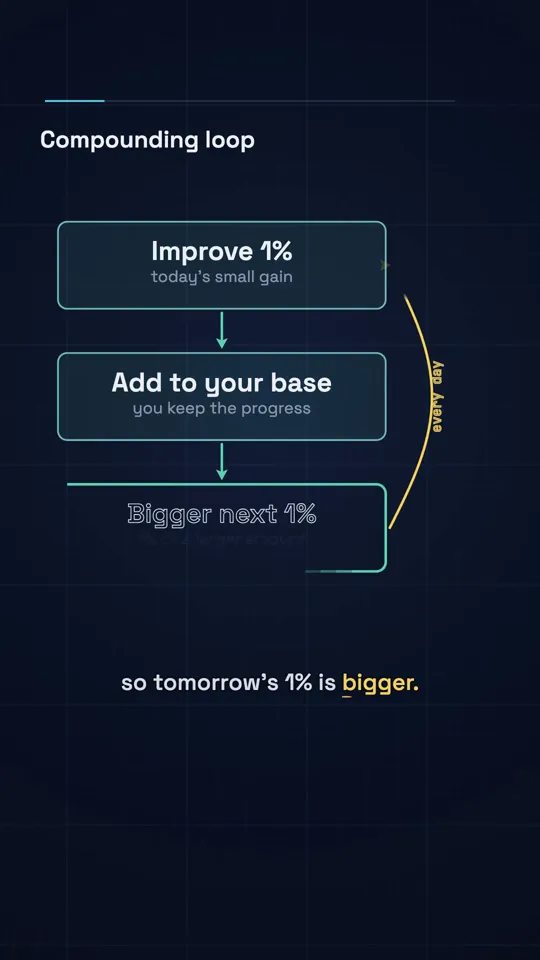
Diagram explainer · 41 s
Ink stickman · 32 s
A worked example: why one month can mislead you
Take two faceless TikTok accounts on the same topic. Account A posts twice a week for a month: 8 videos. Account B posts every day: 30 videos. If both behaved like Buffer's medians, most of their videos would land around 500 views each. A's month totals about 4,000 views. B's totals about 15,000 from the ordinary videos alone, and B has had 30 draws at the top tail instead of 8, so it is far more likely to have a video in the 10,000+ range.
Now suppose B's daily pace meant rushed scripts, and its average watch time fell by a third. TikTok's support page says interactions such as watch time generally weigh most for the For You feed, so B's ordinary videos might drop below the median while A's held up. Which account won depends on whether B kept the quality. The figures here are an illustration built on Buffer's medians, not data from real accounts, but they show why a single month of counting total views can point you the wrong way: always compare per-post retention alongside totals.
Series make a high cadence easier to sustain
The creators who post often without collapsing usually post a series: a fixed format where only the subject changes. "One money myth a day", "Day 14 of explaining the solar system", "Mistakes beginners make with X, part 6". A series cuts the decisions per video (the look, the structure, the opening line are already settled), gives viewers a reason to follow rather than just watch, and makes your analytics easier to read because the videos are comparable.
It also helps with the originality rules. Each episode has its own topic, script and visuals, which is very different from posting near-identical videos. Keep the format fixed and the substance new. Our guides to going viral on Instagram Reels and going viral on TikTok cover how to design a series that earns follows.
Frequency on YouTube Shorts and the 2027 thresholds
If you plan to earn from Shorts, frequency has a new reason from 1 February 2027. YouTube announced in August 2026 that new Partner Program applicants will need 20 million qualified Shorts views in 90 days via the Shorts route (up from 10 million), and every monetising channel will need 10 million qualified Shorts views in the last 90 days to earn a share of Shorts ad revenue that month. Thresholds measured over a rolling 90 days reward a steady flow of videos over occasional bursts.
That still does not mean volume at any cost. YouTube's October 2026 update favours original content in the Shorts feed, and its inauthentic content policy targets mass-produced, repetitive uploads. The same answer holds: as often as you can while each Short stays distinct. Our Instagram and TikTok monetization guide covers all three platforms' programs.
Posting to three apps without tripling the work
One finished vertical video can go to Reels, TikTok and Shorts, which turns a 4-a-week habit into 12 uploads. Do it with clean files: Instagram's creator FAQ says a third-party watermark on your reel may be impacting its reach, TikTok lists someone else's visible watermark as unoriginal, and YouTube's October 2026 update reduces reach for videos re-uploaded from other creators. Your own clean render posted to each app is original on each.
Stagger the posts so you can reply to early comments on each app, and adapt the caption and hashtags per app. Our comparison of Instagram Reels vs TikTok vs YouTube Shorts covers which to prioritise, and best time to post on Instagram and TikTok covers when.
What a cadence costs to produce
Frequency is a production problem before it is a growth one. Here is the honest arithmetic for our own Video Studio, since that is the tool we know. A finished 30 second video costs 26 credits in Kinetic type and 30 in Ink stickman or Diagram explainer; 60 seconds costs 42 or 48. The plans include 500 credits a month for $19 (about 19 thirty-second videos), 2,000 for $49 (about 75) and 4,500 for $99 (about 170), per our pricing page.
| Cadence (30 s videos) | Videos a month | Credits needed (26 to 30 each) | Plan that covers it |
|---|---|---|---|
| 3 a week | About 13 | About 340 to 390 | Creator, $19 |
| 5 a week | About 22 | About 570 to 650 | Pro, $49 (Creator plus a top-up also works) |
| 1 a day | About 30 | About 780 to 900 | Pro, $49 |
| 2 a day | About 60 | About 1,560 to 1,800 | Pro, $49 |
| One video posted to 3 apps | Same as above | No extra credits | Uploading the same file costs nothing |
Credits only cover making the video. The time to read your analytics, write captions and reply to comments is yours whatever tool you use, and it scales with cadence too.
Troubleshooting cadence problems
- Views dropped when I posted more: check whether retention dropped too. If yes, quality slipped. If no, it is normal variance; compare medians over two weeks.
- Views dropped when I posted less: likely fewer chances at a hit, not a penalty. Neither TikTok nor YouTube describes a penalty for gaps, and YouTube says there is no minimum cadence.
- I deleted and reposted a video that flopped: avoid this. A YouTube Shorts lead advised against deleting and reposting because it can look like spam; post a better new version instead.
- All my posts suddenly get almost nothing: run TikTok's Account check (TikTok Studio > More tools) and Instagram's Account Status. Repetitive or reposted content can make a whole account ineligible for recommendations. See how the TikTok algorithm works and how the Instagram algorithm works.
- I cannot keep up: drop to the lowest cadence you can hold for three months. Buffer's consistency data favours months of steady posting over any weekly number.
Keeping a cadence without burning out
The hard part of posting 5 times a week is not the upload; it is having five finished videos. Our Video Studio exists for that: give it a topic and it writes the script, draws every frame as code, voices it and burns in captions inside the safe zone, producing a finished vertical Reel, TikTok or Short in about 3 minutes, in Kinetic type, Ink stickman or Diagram explainer. The faceless video generator page shows the styles.
It does not post everywhere for you yet. Auto-posting to YouTube is live for testers; Instagram and TikTok posting is coming, so for now you download the MP4 and post it. You get 10 free credits at signup, enough to try the script tools but not a full Short; after that, plans are $19, $49 and $99 a month. Pick the cadence first, then the plan that fits it, not the other way round.
Sources and methodology
Platform behaviour comes from Instagram's, TikTok's and YouTube's own documentation and statements, checked in November 2026. Third-party studies are listed with their sample and method, and treated as starting points for your own testing rather than rules. Creator figures from posts on X are the creators' own claims.
- 01TikTok Creator Academy: 8 tips for becoming a successful creatorCadence is up to you; quality over daily updates.
- 02TikTok Creator Academy: building a sustainable posting routineUpdated Aug 18, 2026.
- 03YouTube Help: Shorts search and discovery tipsNo minimum posting cadence required.
- 04Social Media Today: Mosseri on algorithm and posting tipsSep 24, 2026. Post regularly without burning out; no number.
- 05Meta: Spam policyBans posting or engaging at very high frequencies.
- 06TikTok Community Guidelines: integrity and authenticityEffective Sep 24, 2026. Automation and unoriginal content.
- 07YouTube: channel monetization policiesInauthentic (repetitive or mass-produced) content.
- 08Buffer: how often to post on InstagramAug 13, 2025. 2.1M posts, 102K accounts, fixed effects.
- 09Buffer: how often to post on TikTokOct 8, 2025. 11.4M posts, 150K+ accounts.
- 10Buffer: consistent posting studyJan 29, 2025. 100K+ users over 26 weeks.
- 11Buffer: social media benchmarksJan 7, 2026. TikTok efficiency at 8 to 20 posts a month.
- 12Socialinsider: Instagram benchmarksFeb 20, 2026. 67.5M posts, 579K brands.
- 13Socialinsider: TikTok benchmarksApr 22, 2026. 40.7M videos, 257K brands.
- 14Rival IQ / Quid: 2026 industry benchmark reportMar 5, 2026. 150 companies in each of 18 industries.
- 15Metricool: Instagram trends 2026Jun 16, 2026. 24.36M posts, posting volume by account size.
Frequently asked questions
How often should I post on Instagram in 2026?
3 to 5 times a week is the best-supported answer. Buffer's study of 2.1 million posts found it more than doubles weekly follower growth compared with 1 to 2 posts, and more posts still help with diminishing returns. Instagram itself gives no number, only advice to post regularly without burning out.
How often should I post on TikTok?
Start at 3 to 5 a week. Buffer's study of 11.4 million TikToks found views per post rise with frequency, mostly because more posts mean more chances at a breakout; the median post stays around 500 views. TikTok says your exact cadence is up to you.
Is posting every day on TikTok too much?
Not if each video is genuinely different and good. Daily posting falls inside Buffer's highest frequency bands. The risk is quality slipping or videos becoming near-duplicates, which TikTok's similarity check and originality rules work against.
Does posting too much hurt reach on Instagram?
No study we found shows a penalty for frequent original posting. The limits are policy: Meta bans posting or engaging at very high frequencies, and accounts posting mostly unoriginal content over 30 days may lose recommendations.
Does taking a break hurt my account?
Neither platform describes a penalty for gaps, and YouTube says there is no minimum cadence for Shorts. You simply get fewer chances at a hit while you are away. Buffer found steady posting over months beats bursts.
Can I post the same video on Instagram, TikTok and YouTube Shorts?
Yes, if it is your own original video uploaded as a clean file to each app. Avoid other apps' watermarks, which Instagram says may limit reach and TikTok treats as unoriginal.
How often should I post YouTube Shorts?
YouTube says there is no minimum cadence. Buffer suggests 1 to 3 a week as guidance, though without Shorts-specific data; if you already post Reels or TikToks, uploading the same clean renders to Shorts costs no extra production time.