
How the Instagram algorithm works in 2026: Reels, Explore and feed
November 5, 2026 · 20 min read
Here is how the Instagram algorithm works in 2026, in one paragraph. There is no single algorithm. Instagram runs a separate ranking system for each surface (Feed, Stories, Reels, Explore, Search and a few more), and Meta publishes a system card for each one listing what it tries to predict. For Reels, the predictions include how likely you are to watch less than three seconds, how likely you are to watch more of the reel than 95% of people do, and how likely you are to share it, comment, follow the author or use its audio. Adam Mosseri, who runs Instagram, has repeatedly named three signals as the ones that matter most: watch time, likes per reach and sends per reach. Likes weigh slightly more with your followers; sends weigh slightly more with people who do not follow you yet.
On top of the ranking sit two filters that decide whether you are eligible to be recommended at all. The first is originality: since April 2026 an account that mostly posts reels, photos or carousels it did not make (or only lightly edited) may stop being recommended to new audiences. The second is the Recommendations Guidelines, which list content and accounts Instagram will not suggest to non-followers. You can check the second one yourself in Account Status.
Everything below is sourced to Meta's Transparency Center, Instagram's Help Center and Mosseri's dated statements, checked as of November 2026. Where something is a community belief rather than something Instagram has said, it is labelled that way.
Many systems, not one algorithm
Instagram has said this since 2021: it does not have one algorithm that oversees what people see. Meta's Transparency Center now goes further and publishes a system card for each surface, covering Feed, Stories, Explore, Reels (which Meta calls Reels Chaining), Search, Feed Recommendations, Suggested Accounts, Notifications and Comments. Each card lists the predictions the ranking model makes and examples of the input signals it uses.
Why this matters for a creator: a post can do well in one place and not another for different reasons. A carousel your followers swipe all the way through may rank well in their Feed and never reach Explore. A reel that strangers watch to the end and send to friends can travel through the Reels tab while barely moving your followers' Feed. When you diagnose a post, first ask which surface the views came from. Insights shows the split between followers and non-followers, and that is usually the clue.
| Surface | Card updated | Predictions Meta lists (selection) | What it means for you |
|---|---|---|---|
| Reels | Nov 11, 2025 | Watch less than 3 seconds; watch more than 95% of viewers; share, including off Instagram; comment; use the audio; follow the author; tap Interested | The first seconds and the ending both count, and shares are named explicitly |
| Explore | Jun 22, 2026 | Follow the author; view a post for more than 5 seconds; watch more than 95% of a video; like; save | Explore is about strangers deciding you are worth following |
| Feed | Jun 29, 2026 | Swipe through the whole carousel; enjoy or skip the post; time on your profile afterwards; share in a DM | Followers' Feed rewards posts people finish and send |
| Feed recommendations | Jun 29, 2026 | How informative a post is; whether you would tap Interested; time spent in Reels after opening a reel from Home | Suggested posts from accounts you do not follow lean on usefulness |
| Stories | Sep 18, 2025 | Tap a story; answer a question sticker; likely family or close friend; reply; send a like | Stories are a relationship surface, not a discovery one |
| Search | Jun 23, 2026 | Text match between the search and usernames, profile names and results | Your name, bio and caption words decide whether you are findable |
What the Reels system tries to predict
The Reels card, last updated on November 11, 2025, is the most useful document Instagram has published for short-form creators. Its listed predictions include how likely you are to watch less than three seconds of a reel, how likely you are to watch more of it than 95% of users, how likely you are to tap Interested, comment, use the reel's audio, reshare it, share it off Instagram and follow its author.
The sample input signals on the same card include how many times users watched at least three seconds of the reel anywhere on Instagram, the length of the reel and how much time people spent viewing it. The card also says integrity processes remove content that is non-recommendable or breaks the Community Guidelines before anything is ranked.
Read those predictions as a description of a good reel from the viewer's side. Do people get past the first three seconds? Do they stay longer than most viewers stay on most reels? Do they do something afterwards: send it, follow you, reuse the sound? Every growth tactic worth keeping maps onto one of those questions. Every tactic that does not (a hashtag trick, a magic posting hour) is at best a rounding error.
- Under three seconds is a skip. Insights calls this skip rate, and it is the clearest signal you get about your opening.
- Watching more than 95% of viewers is relative. A 40 second reel that people finish can beat a 10 second reel that people abandon halfway.
- Sharing off Instagram is listed separately from resharing, so a reel people copy into WhatsApp or iMessage is doing something the system measures.
- Using the audio and following the author are both predicted, which is why series and recognisable formats tend to compound.
How a new reel finds its audience
Instagram described the distribution pattern in a February 2025 post on helping creators of all sizes break through: a new reel is first shown to a small audience, and the reels that perform best with that group are shown to progressively larger groups. The same post said reels are reshared over 4.5 billion times a day across Instagram and Facebook, which is a reminder of how central sending has become.
In September 2026 Mosseri listed four things that drive ranking, as reported by Social Media Today: originality, recency (feeds are kept roughly in chronological order), deliberately testing posts from small creators, and the size of the ranking models. The testing point is the important one for a new account. You do not need followers to be shown to strangers; you need a reel that the first small test audience does not skip.
Trial reels formalise this. Launched on December 10, 2024, a trial reel is shown to non-followers first. After about 24 hours you can see its views, likes, comments and shares, and you can then share it to your followers or let Instagram share it automatically if it performs well within the first 72 hours. A trial reel does not appear on your grid or Reels tab unless you share it. It is the safest way to test a new format without filling your profile with experiments.
The three signals Mosseri keeps naming
In January 2025, as reported by Social Media Today, Mosseri said the three most important signals were watch time, likes and sends. He has framed the last two as rates: likes per reach and sends per reach. Likes count slightly more for connected reach (people who follow you), and sends count slightly more for unconnected reach (people who do not). In May 2024 he had already said that, in his experience, sends per reach correlate with overall reach more than anything else.
In May 2026 he returned to the theme and told creators to watch engagement rates rather than raw reach, again tying like rate to followers and share rate to non-followers. That is practical advice. Raw reach depends on how many people Instagram chose to test you with, which you do not control. The rate tells you how those people reacted, which you do.
The three signals and where to find them
SIGNAL            WHO IT MATTERS FOR        WHERE YOU SEE IT
Watch time        everyone                  Reel insights: watch time,
                                            average watch time, retention
Likes per reach   followers (connected)     likes / accounts reached
Sends per reach   non-followers             shares / accounts reached
                  (unconnected)             (share rate in newer Insights)

Rule of thumb: if non-follower reach is the goal, design the
reel so that someone would send it to one specific person.
A useful way to write for sends: before you script a reel, finish the sentence 'You have to see this, it's exactly like...' or 'This is what I was telling you about'. If you cannot name who a viewer would send it to, the reel probably earns likes at best.
Watch time, length and the 3 minute line
In February 2025 Mosseri explained, again via Social Media Today, that Instagram looks at both the percentage of a video watched and the number of seconds watched, because it does not want to penalise longer videos. That matches the Reels card's 'more than 95% of users' prediction, which is relative rather than an absolute completion rate.
Length limits have moved twice. In January 2025 the maximum went from 90 seconds to 3 minutes, and Instagram's creator blog said reels up to 3 minutes would be eligible to be seen by non-followers. As of November 2026 the Help Center says you can record and edit reels up to 20 minutes, with an important note: reels over 3 minutes won't be recommended to new audiences. In October 2026 Instagram also began testing 90 minute 'Features' in Brazil with a limited US test, and said reel length and recommendations would not change.
The practical rule: if a reel exists to reach new people, keep it at 3 minutes or under. Third-party data points the same way. Socialinsider's 2026 study of 23.6 million videos from 570,000 brand accounts (January to June 2026) found Reels engagement and views peaked around 45 to 60 seconds and dropped sharply above 180 seconds. That is brands, not creators, and correlation, not cause, but it lines up with the official cut-off. For how to pick a length for each format, see our guide to hooks for Reels and TikTok, which covers pacing as well as openings.
Explore: strangers deciding to follow
The Explore card (updated June 22, 2026) puts following the author first in its list of predictions, followed by viewing a post for more than five seconds, watching more than 95% of a video, liking and saving. Back in 2023 Instagram also said popularity signals matter much more in Explore than in Feed or Stories, which makes sense: Explore is shown to people who have no relationship with you.
The implication is that Explore rewards posts that make the account look worth following, not just the post worth liking. A profile with a clear subject, a consistent look and a recent run of similar posts converts a curious tap into a follow. A profile of unrelated experiments does not. If you are starting from zero, our guide to starting a faceless Instagram page walks through how to set up a profile that converts visitors.
Feed and feed recommendations
Your followers' Feed is the most relationship-driven surface. The Feed card (June 29, 2026) lists predictions such as swiping through the whole carousel, enjoying or skipping the post, how long someone spends on your profile after seeing it, and how likely they are to share it in a direct message. It also lists as a signal whether the post is informative content: news, product reviews, tutorials and how-tos.
Feed Recommendations, the posts from accounts you do not follow that appear in Home, has its own card with the same date, and the first prediction it lists is how informative a post is. Others include whether you would tap Interested and how long you would spend in Reels after opening a reel from Home. That is a strong hint that useful, explain-something posts travel to non-followers through Home, not only through the Reels tab.
Carousels deserve a mention because they are the one format where third-party data consistently shows higher engagement than Reels. Buffer's analysis of more than 52 million posts across over 200,000 accounts (January 2024 to December 2025, published August 2026) found Reels reached 36% more people than carousels while carousels earned 12% more engagement. Instagram has also said that adding audio to photos and carousels means they may appear in the Reels tab. A sensible mix for most accounts is Reels for reach and carousels for depth with the followers you already have.
Stories rank by closeness
The Stories card (September 18, 2025) is almost entirely about relationships: how likely you are to tap a story at the top of Home, answer a question sticker, reply, send a like, and how likely it is that you and the author are family or close friends. Stories rarely bring new followers. They keep existing ones close, and that closeness feeds back into Feed ranking.
One persistent tactic is resharing every new post to Stories to 'boost' it. In April 2026 Mosseri said doing so is not going to meaningfully change your reach overall. Share to Stories when you have something to say about the post, not as a ritual.
Search and Instagram SEO
The Search card (June 23, 2026) describes text matching: how similar your search words are to an account's username or profile name, and to the words in the results. In plain terms, Instagram search is still largely literal. If your page is about personal finance for students and none of those words appear in your name field, bio or captions, you are hard to find.
Search engines can now find you too. According to the Help Center, Instagram lets search engines index photos and videos from public reels and posts uploaded from January 1, 2020 onwards, for accounts whose holder is over 18, that are public and that are professional accounts. Third-party coverage dates the change to July 2025; we could not find an official date. You can opt out in privacy settings.
We cover captions, keywords, names and hashtags in depth in Instagram and TikTok SEO. The short version: write the caption's first line the way someone would search for the topic, put the subject in your name field, and say the key words out loud in the reel so captions and on-screen text match.
Originality: the rule that changed most
If you remember one section of this guide, make it this one. In April 2024 Instagram changed its ranking so that when it finds identical pieces of content, it recommends only the original, which replaces reposts in recommendations, and aggregator accounts are dropped from recommendations. In April 2026 the rule was extended from reels to photos and carousels. Meta's wording, as reported by Engadget, is that an account that primarily posts unoriginal reels, photos or carousels it did not create or edit in a material way may not be seen in recommendations to new audiences. Social Media Today reported that accounts are judged over a rolling 30 days; followers still see their posts, and licensed publishers are exempt.
The Help Center defines original content plainly: "Content is original when it is created by the same account that posts it." Material edits are those that add context that meaningfully enhances the entertainment, informational or narrative value. It then lists edits that do not count, and the list is worth reading slowly because it describes most low-effort repost pages:
- "Subtitle transcripts in the same language as the audio language"
- "Borders that change the aspect ratio or surround the content"
- "Logos, watermarks, or simply providing attribution to the original creator"
- Screen-recording someone else's video
- Stitching together clips or adding a watermark (the Help Center says this does not qualify as materially edited)
Instagram adds an 'Original by' label that links copies back to the creator, so even when a repost is seen, credit flows to the source. For your own videos posted on several platforms, the issue is not originality but watermarks: Instagram's creator FAQ tells people to ditch the third-party watermark because it may be impacting reach. Our comparison of Reels vs TikTok vs YouTube Shorts covers how to post clean versions everywhere.
What gets a reel shown less
Separately from originality, the Help Center has a short list of reels Instagram shows less often. As of November 2026 it says reels are shown less when they "Are muted, blurry, or low resolution", "Contain borders, logos, or watermarks", "Have the majority of the image covered by text" or "Are not original videos". On the positive side, it favours reels that use music from the Instagram library or original audio made with the Reels audio tool, and reels that are filmed vertically.
Two of those catch faceless and text-heavy pages often. A reel that is mostly a wall of text over a static background can count as majority text. And a reel exported with a letterbox to fit a horizontal clip into 9:16 has a border. Both are easy to fix at the design stage: keep text to short lines inside a safe area, and design for vertical from the start. Our safe zones and specs guide has the pixel numbers.
Kinetic type · 35 s
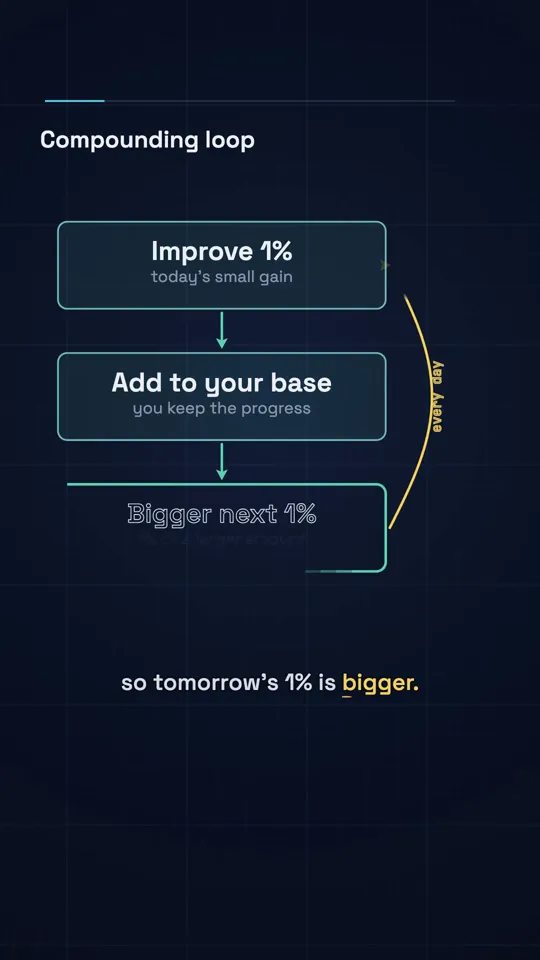
Diagram explainer · 41 s
Recommendations Guidelines and the shadowban question
'Shadowban' is not a word Instagram uses. What it does have is the Recommendations Guidelines, which say Instagram works to avoid recommending content that could be low-quality, objectionable or particularly sensitive, even when it is not severe enough to remove. Content that stays up but is not suggested to non-followers is the thing creators usually mean by a shadowban, and Instagram lets you check it.
As of November 2026 the guidelines list as not recommendable, among other things, unoriginal content repurposed with only minor edits, long captions unrelated to the content, and "coordinated comment networks intended to artificially drive engagement and distribution". Accounts are not recommended if they have "Repeatedly engaged in misleading practices to build followings, such as purchasing 'likes'", recently violated the Community Guidelines, or repeatedly featured a photorealistic AI-generated person without disclosing it. Meta's enforcement page separately says it lowers the distribution of clickbait, engagement bait and content principally repurposed from other sources.
On the ads conspiracy, Instagram has been direct since 2023: it does not suppress content to encourage people to buy ads, and it says it is in its interest as a business for creators to reach audiences. Independent research is more nuanced. A 2024 investigation by The Markup, using about 100 test accounts, found some categories of posts were far less likely to surface under a test hashtag, and academic work describes users building 'folk theories' to explain drops. So both things are true: hidden limits on recommendation exist and are now visible in Account Status, and most sudden drops have duller explanations.
Checklist: am I being limited?
1. Professional account: Settings and activity > Account Status
2. Look at "What can't be recommended" (or similar wording):
   - green: your content is eligible for recommendations
   - flagged: tap the item, then "Edit or remove content",
     or "Disagree with decision" to request a review
3. Also check your bio and profile photo; the Help Center says
   both can affect eligibility.
4. Then look at the content itself: originality, borders,
   watermarks, text-heavy frames, muted or blurry uploads.
Hashtags in 2026: five, and not for reach
The Help Center now caps posts at five hashtags: "You can use up to 5 tags on a post. If you include more than 5 tags on a single photo/video, your comment won't post." Instagram's announcement, reported in December 2025, framed it as using fewer, more targeted tags rather than many generic ones. Mosseri has said several times, including in early 2025, that hashtags are no longer a primary way to increase reach and do not significantly increase it.
Hashtags still do two small jobs: they describe the topic (which helps classification and search) and they connect a post to a specific community or series. Metricool's 2026 study of 24.36 million posts from 375,000 accounts found posts with at least one hashtag averaged fewer views than the platform average, which is a correlation and not a reason to drop them. Treat hashtags as labels, pick two to four precise ones, and spend the time you saved on the first three seconds.
Myths Instagram has addressed directly
| Belief | What Instagram has said | Source and date |
|---|---|---|
| Hashtags boost reach | They do not significantly increase reach; up to 5 per post | Mosseri (early 2025); Help Center (Nov 2026) |
| 'Link in bio' is penalised | It will not affect your reach one way or another | Mosseri via Social Media Today, Jul 2025 |
| Resharing to Stories boosts a post | Not going to meaningfully change your reach overall | Mosseri via Social Media Today, Apr 2026 |
| You must engage with similar accounts before posting | Mosseri said that is definitely not the case | Social Media Today, Aug 2025 |
| Instagram hides posts to sell ads | We don't suppress content to encourage people to buy ads | Instagram, May 2023 |
| There is a best time Instagram rewards | No official statement; Mosseri has said being active around posting may help indirectly but has no direct link to ranking | Social Media Today summary, early 2025 |
| Editing in Edits helps reach | Mosseri said it helps a little for now, and called it temporary | Social Media Today, Aug 2025 |
On timing specifically, the third-party studies disagree with each other, which is itself informative. We compare Buffer, Sprout Social, Hootsuite, Later and Metricool in the best time to post on Instagram and TikTok.
Your Algorithm and why viewer controls matter to you
Viewers can now steer their own recommendations. Your Algorithm, which Instagram's own post dates to December 10, 2025 for Reels, then Explore in April 2026 and Feed in June 2026, shows people the topics Instagram thinks they like and lets them ask for more or less of each. It sits behind an icon of two lines with hearts at the top right of Reels or Explore, or under Settings > Content preferences. Instagram has also offered a reset that clears recommended content across Explore, Reels and Feed since November 2024.
For creators this has a quiet consequence: topic matters more than ever. If viewers are choosing topics, a page whose posts clearly belong to one topic is easier to place in someone's 'more of this'. A page whose posts wander between five topics is harder to classify. Niche is not just a branding choice; it is how a classifier knows who to test you with.
Read your Insights against the algorithm
Instagram changed its metrics twice in two years, so old advice often points at numbers that no longer exist. In August 2024 'plays' became 'views', and views became the main metric across formats, with repeat views counted. In January 2025 a view rate was added; in August 2025 it was replaced by skip rate, the percentage of views where people skipped in the first three seconds, along with a retention chart (Instagram's advice: the flatter the line, the more engaged the audience). In April 2026 a new Insights layout added share rate and skip rate percentages.
Open any reel and tap View insights, or go through the professional dashboard. The Edits app has an Insights tab too, covering the last 60 days, and its Help Center page defines views as every start or replay, reach as unique accounts, and follows as accounts that followed you after viewing the reel.
| Metric | Algorithm question it answers | If it is weak, change this |
|---|---|---|
| Skip rate | Did people get past 3 seconds? | The first frame and first line; start on the payoff |
| Retention chart | Where did they leave? | Cut the section before each drop; move the payoff earlier |
| Average watch time | Did they stay longer than most? | Shorter edit, tighter pacing, fewer setup lines |
| Share rate (sends per reach) | Would a stranger pass it on? | Make it about a specific person or situation |
| Likes per reach | Did followers enjoy it? | Serve your core audience's actual interest |
| Follows per reel | Is the account worth following? | Series, consistent look, clear bio |
| Followers vs non-followers | Which surface did it travel on? | Diagnose Reels and Explore separately from Feed |
A 30 day audit you can run on any account
Algorithm knowledge is only useful if it changes what you post. This is the plan we would run on an account whose reach has flattened. It assumes about four reels a week; adjust the counts to your cadence, and see how often to post on Instagram and TikTok for what the frequency studies found.
30 day audit
WEEK 1  Eligibility
  [ ] Account Status: nothing flagged for recommendations
  [ ] Last 30 days: every post made by you, no reposts,
      no other app's watermark, no borders
  [ ] Bio and name field say the topic in searchable words
  [ ] Pull last 20 reels' skip rate, share rate, follows

WEEK 2  Openings
  [ ] Post 4 reels whose first frame is the payoff
  [ ] Spoken hook and on-screen hook say the same thing
  [ ] Compare skip rate with week 1's median

WEEK 3  Sends
  [ ] Script each reel for one recipient ("send this to...")
  [ ] 2 of the 4 as trial reels to test a new format
  [ ] Compare share rate with week 1's median

WEEK 4  Keep and cut
  [ ] Rank all 8 new reels by share rate, then skip rate
  [ ] Make 3 more of the top format; drop the bottom one
  [ ] Write down one rule you learned, e.g. "numbers first"
Change one thing at a time. If you rewrite hooks, switch format and move posting times in the same week, you will not know which change moved the numbers. And judge in batches: one reel tells you very little, five reels in the same format tell you something.
Troubleshooting: when reach suddenly drops
- Check Account Status first. A flagged post or a bio issue can stop recommendations to non-followers while followers still see you, which looks exactly like a sudden drop.
- Look at the last 30 days for anything not yours. Since April 2026 reposts of photos and carousels count toward the aggregator judgement, not just reels.
- Compare follower and non-follower views. If followers are steady and non-followers fell, the problem is recommendation eligibility or the opening seconds, not your audience.
- Check skip rate on the drop period. A new hook style that strangers skip will shrink the test audience's verdict before anything else changes.
- Look for a format drift. Viewers' topic controls and classification both reward a clear subject; three off-topic posts in a row can confuse both.
- Do not delete and repost. YouTube's Shorts team has warned this can look like spam, and Instagram has given no sign that reposting resets anything. Post something new instead.
- Do not buy engagement or join comment pods to 'fix' it. Buying likes is explicitly a reason accounts are not recommended, and coordinated comment networks are named in the Recommendations Guidelines.
Where Video Studio fits
Nothing in this guide can be automated away: the topic, the opening line and the reason someone would send a reel are editorial decisions. What can be made faster is the production. WhatToUpload's Video Studio turns a one-line topic into a finished vertical video in about 3 minutes: it writes the script, draws every frame as code, voices it and burns captions in inside the safe zone, so the result is original, vertical and free of borders and watermarks by construction. Styles live today are Kinetic type, Ink stickman and Diagram explainer.
It does not post for you on Instagram yet. Auto-posting to YouTube is live for testers and Instagram and TikTok posting is coming, so for now you download the MP4 and post it yourself, ideally as a trial reel first. Plans are $19, $49 and $99 a month. You get 10 free credits at signup, enough to try the script tools but not a full video; a 30 second video is 26 to 30 credits. For a no-signup start, the free tools cover ideas and hooks, and the faceless video generator page shows the styles.
Sources and methodology
Platform behaviour comes from Instagram's, TikTok's and YouTube's own documentation and statements, checked in November 2026. Third-party studies are listed with their sample and method, and treated as starting points for your own testing rather than rules. Creator figures from posts on X are the creators' own claims.
- 01Meta Transparency Center: Instagram Reels system cardUpdated Nov 11, 2025. The predictions and signals for Reels ranking.
- 02Meta Transparency Center: Instagram Explore system cardUpdated Jun 22, 2026.
- 03Meta Transparency Center: Instagram Feed system cardUpdated Jun 29, 2026. Also see the Feed Recommendations, Stories and Search cards on the same site.
- 04Instagram Help Center: original contentRead Nov 5, 2026. Definition of original and edits that do not count.
- 05Instagram Help Center: Recommendations GuidelinesRead Nov 5, 2026. What is not recommended, including bought likes and comment networks.
- 06Instagram Help Center: Account StatusRead Nov 5, 2026. Checking recommendation eligibility.
- 07Instagram Help Center: reels shown less oftenRead Nov 5, 2026. Muted, blurry, bordered, watermarked or text-heavy reels.
- 08Instagram Help Center: Reels lengthRead Nov 5, 2026. Up to 20 minutes; over 3 minutes not recommended to new audiences.
- 09Instagram Help Center: hashtagsRead Nov 5, 2026. Up to 5 per post.
- 10Social Media Today: Mosseri on watch time, likes and sendsJan 22, 2025. Reports Mosseri's own video.
- 11Social Media Today: Mosseri on engagement rates over reachMay 26, 2026.
- 12Social Media Today: Mosseri's four ranking driversSep 24, 2026. Originality, recency, testing small creators, model size.
- 13Engadget: originality penalty extended to photos and carouselsApr 30, 2026.
- 14Instagram: trial reelsDec 10, 2024.
- 15Instagram: Your AlgorithmRollout from Dec 10, 2025 to Jun 10, 2026.
- 16Buffer: how to grow on Instagram (52M+ posts)Aug 21, 2026. Reels reach vs carousel engagement.
Frequently asked questions
What is the most important signal in the Instagram algorithm in 2026?
Mosseri has named three: watch time, likes per reach and sends per reach. Sends matter slightly more for reaching non-followers and likes slightly more for followers. Meta's Reels system card also lists skipping in under three seconds and watching longer than 95% of viewers as predictions.
Does Instagram shadowban accounts?
Instagram does not use the word. It does stop recommending some content and accounts to non-followers under its Recommendations Guidelines, and professional accounts can see whether that applies to them in Account Status, with an option to disagree and request a review.
How many hashtags should I use on Instagram?
As of November 2026 the Help Center allows up to five per post. Mosseri has said hashtags do not significantly increase reach, so use two to four precise ones as topic labels and put your effort into the caption and the opening seconds.
Do longer Reels get less reach?
Instagram says it looks at both the percentage and the number of seconds watched so it does not penalise length. But reels over 3 minutes are not recommended to new audiences, so keep discovery reels at 3 minutes or less.
Does reposting other people's content still work on Instagram?
Not for growth. Since April 2026 accounts that mostly post unoriginal reels, photos or carousels may not be recommended to new audiences, and watermarks, borders or credit lines do not count as material edits.
Does posting time affect the Instagram algorithm?
Instagram has published no best time. Feeds are kept roughly chronological, so being early in your followers' session can help a post be seen, but third-party studies disagree on the hours. Test two windows from your own Insights.
What are trial reels?
Reels shown to non-followers first. After about 24 hours you see their results and can share them to followers, or let Instagram do it automatically if they perform well within 72 hours. They do not appear on your grid unless shared.