
Faceless channel with Claude Code: an honest playbook
November 5, 2026 · 7 min read
A faceless channel is two things repeated: a look people recognise and a format they come back for. Claude Code is unusually good at both, because a style written as code stays identical from video to video, and a format written as a brief can be filled with a new story every day.
This playbook covers picking a style, designing a series, a weekly workflow you can sustain, what it costs, and the part the "I made $40k a month" threads skip: the platform rules that end mass-produced channels. The same plan works for an AI faceless Instagram page; the differences are covered near the end.
Short on time? Video Studio does all of this from one sentence in about 3 minutes. See how
Three styles a faceless channel could own
Ink stickman, Kinetic type and Diagram explainer, each drawn entirely as code: no stock footage, no generated faces. Untouched renders.
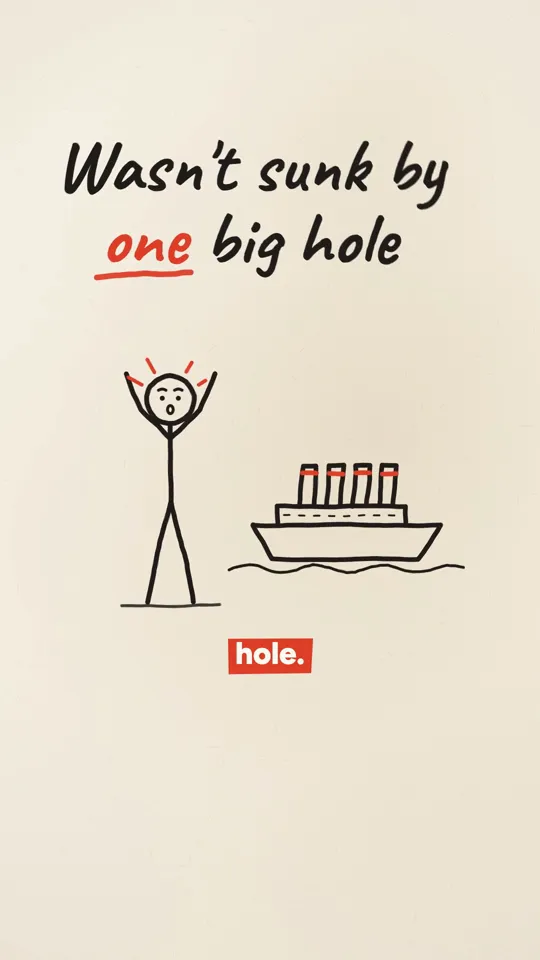
Ink stickman · 35 s

Kinetic type · 34 s
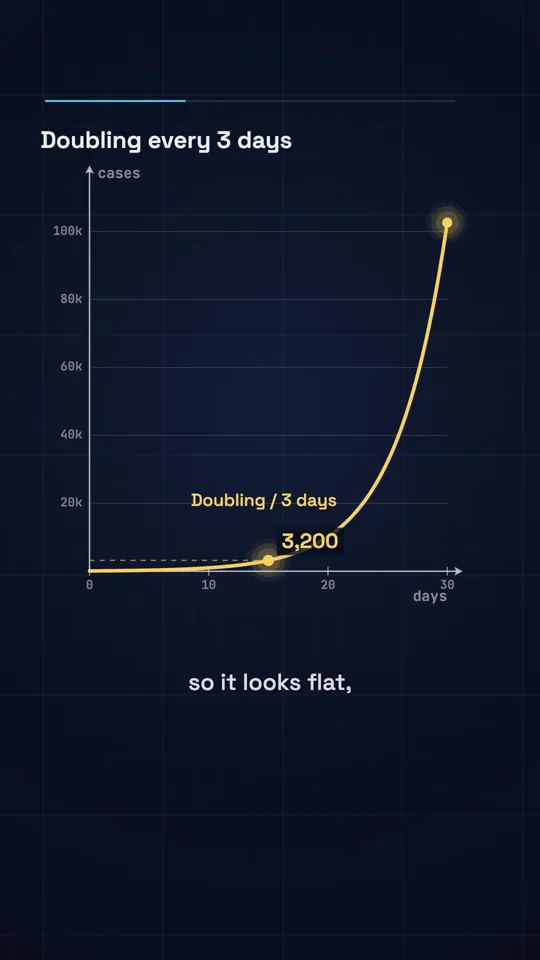
Diagram explainer · 41 s
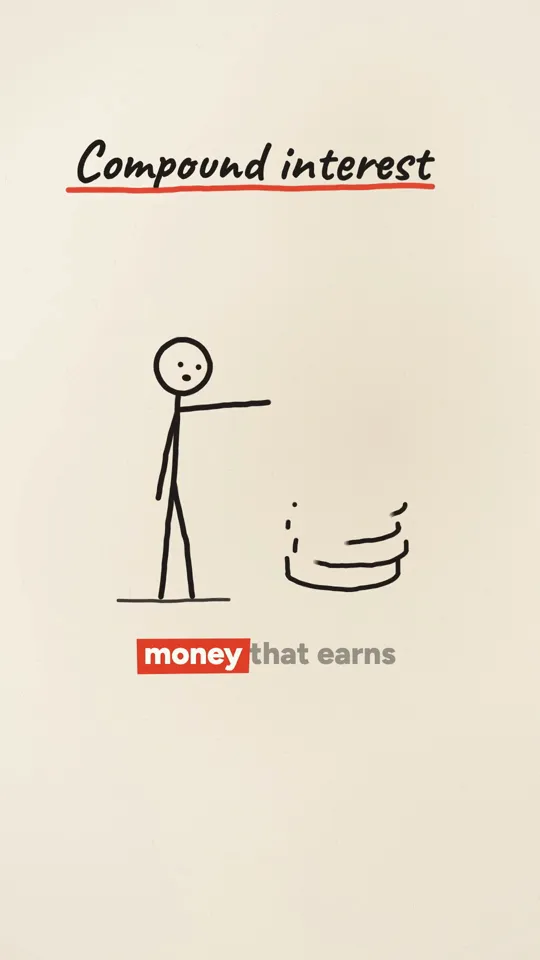
Ink stickman · 32 s
What the success stories do and do not show
The posts that sell this idea are real posts, but the numbers in them are the creators' own claims and we have not verified any of them. One creator on X describes building a faceless ink stickman explainer channel to $41k a month with Claude. Another says a page of glass anatomy videos made with Opus 5.5 reached 18 million views on 26 posts. A third reports 23.4 million views on five videos of a zombie survival series. Several of the loudest accounts in this space also sell courses or carry paid partnership labels.
What these posts do show is consistent, and more useful than the numbers. Every one of them names a look, not a tool. Every one runs a series, not one-offs. And the creators who explain their process talk about direction: choosing what goes on screen, cutting what is dull, rewriting hooks. Nobody describes typing a topic and posting whatever came out.
Pick a style that code can own
Code-drawn styles have one big advantage over AI image and video slideshows: they never drift. The palette, type, line weight and character stay exactly the same in video 1 and video 300, which is what makes a channel recognisable in a feed. These are the looks with fresh evidence of demand on X in late 2026 that can be drawn in pure code.
| Style | Looks like | Works for | Effort to build |
|---|---|---|---|
| Ink stickman explainer | A stick figure drawn on paper as the narrator talks | Life lessons, money, how things work | Low |
| Kinetic type | Huge words landing on the beat | Facts, history, hot takes | Low |
| Diagram explainer | Graphs and equations drawing on a dark grid | Science, maths, finance | Low to medium |
| Flat space explainer | Navy space, glowing planets, a mascot, "What if" questions | Science and thought experiments | Medium |
| Paper collage documentary | Newsprint, halftone cutouts, red string, map pins | History, true stories, crime | Medium, needs public domain photos |
| Stickman survival series | "Imagine you...", a DAY counter, two-choice endings | Series that drive comments | Medium |
| Satisfying simulation | Physics cuts, slices and sorts, no narration | Any language, no voice cost | Medium, needs 3D |
From our study of X posts and code-video catalogues, November 2026. Name your version generically, not after the studio that inspired it.
Design the series before the first video
Write a one page series bible and give it to Claude at the start of every session. It is the difference between a channel and a folder of unrelated clips.
# Series: [name]

PROMISE   One sentence a viewer would use to describe the channel.
          "History's smallest mistakes with the biggest consequences."
LENGTH    30 to 45 s. Vertical 1080x1920.
STYLE     [style recipe file]. Never change palette or type.
HOOK      First 2 s state the consequence, then the tiny cause.
SHAPE     Hook / setup in 2 lines / the mistake / the cost / one
          line that sticks. A new visual every 2 to 3 s.
ENDING    Ask one either-or question for comments.
VOICE     [voice name], calm, no hype words.
FACTS     Every claim has a link in sources.md before voicing.
NEVER     Invented numbers. Real people's faces. Copyrighted music.
VARY      Each episode changes the setting colour accent, the main
          diagram and the opening move, so no two neighbours match.
The VARY line matters more than it looks. It is what keeps a consistent series from becoming identical uploads, which is exactly the line the platforms draw.
A weekly workflow you can keep up
Batching keeps the cost and the effort down, because Claude's context and your kit are warm once and used many times.
- Monday, research: list 15 candidate topics, check each one has a real story and a source, and keep the best seven. Our idea and hook tools are free for this step.
- Monday, scripts: have Claude write all seven scripts against the series bible, then read every one aloud. Rewrite any hook that does not work out loud.
- Tuesday, voice: generate the narration with word timings for all seven.
- Tuesday and Wednesday, films: one fresh Claude session per video, with the bible and the timings. Approve stills before each full render, and run renders outside the session.
- Thursday, review: watch all seven on a phone with sound on. Fix and re-render the weak ones.
- Then schedule them one a day, and spend Friday reading comments and retention on last week's posts. That review decides next week's topics.
The policy line: mass-produced content
YouTube's monetization policies require content to be original and authentic. Since July 2025 the relevant rule has been called inauthentic content, and it covers content that is mass-produced or repetitive: videos made from a template with little variation between them, at scale. Using AI to make videos is not the problem. Uploads that are interchangeable are. A channel caught by it loses monetization, and can lose it across the whole channel.
This is the real risk of an automated faceless channel, and it is a design problem, not a luck problem. In practice: every episode tells a different, specific story; the visuals change with the story, not just the words; the narration is written for that episode, not spun from a template; and you use different music across videos rather than one loop on everything. Instagram and TikTok reward originality in their recommendations in similar ways, so the same habits travel.
Running an AI faceless Instagram page instead
- Use a professional account (Creator or Business). It unlocks insights, and publishing tools need it.
- Reels and YouTube Shorts share the same 9:16 frame and the same danger zones; we keep text inside x 90 to 910 and y 260 to 1420 on a 1080 by 1920 frame for both.
- Instagram is more of a sharing platform: an ending people want to send to a friend can do more than a comment prompt.
- Do not post a YouTube export with a watermark or an end screen that points elsewhere. Render a clean cut per platform.
- Pages built around a niche (stoic quotes, faith, fitness, money) often use the painterly or kinetic type styles. Check every quote's attribution; misattributed quotes are the most common error in these niches.
What it costs to run
If you make each video in an agentic Claude Code session, budget for our measured $7 to $13 in API tokens per 60 second video, or $3 to $5 for Shorts cut from a world you have already built. Seven videos a week at those rates is real money, which is why the batch workflow and a shared kit matter. On a Claude subscription you will meet usage limits before a bill.
Voice, music and rendering add well under a dollar per video. A template engine such as Video Studio costs about $0.10 to $0.15 to run per 30 second video, which is what makes a daily channel affordable.
Mistakes that sink faceless channels
- Changing style every week to chase a trend. Viewers follow a look; the algorithm learns one.
- Posting the first render. Review on a phone, cut the slow bits, rewrite the hook.
- Inventing statistics to make a script punchier. One false number in the comments costs more trust than it gained in views.
- Using copyrighted music, film clips or a real person's likeness. Code-drawn video avoids most of this by design; do not undo it.
- Uploading near-identical videos at volume. It is the fastest route to the inauthentic content policy.
Questions
Can you make money with a faceless channel made with Claude Code?
Creators on X say they do, and some post large numbers, but those are their own unverified claims. YouTube monetization is available to faceless and AI-assisted channels that meet the Partner Program requirements and make original, varied content.
Is AI content allowed on YouTube?
Yes. YouTube's concern is content that is mass-produced, repetitive or unoriginal, not the tools used. Realistic synthetic content also needs to be disclosed when you upload. Code-drawn animation of type and diagrams is not realistic footage.
How many videos a week should a faceless channel post?
As many as you can make well and keep making. Consistency over months matters more than volume in a single week. Seven a week is a common batch target for Shorts; start lower if quality slips.
Do I need to show my voice?
No. Text to speech narration is normal on faceless channels. Use a library voice or a clone of your own voice; never a lookalike of a real person.
Which niche should I pick?
One where you can find a real, specific story every day and where the style fits. Our free niche and RPM tables show what different niches tend to pay on YouTube.
Sources
Cost and render figures are our own measurements from November 2026 unless a source says otherwise. View and revenue figures from creators are their own claims, linked so you can judge them.
- 01YouTube channel monetization policiesIncludes the inauthentic content rule.
- 02YouTube Partner Program overview and eligibility
- 030xrux on X: faceless channel with ClaudeThe $41k a month figure is the creator's own claim.
- 04Deserclaude on X: anatomy videos with Opus 5.5The 18M views on 26 posts figure is the creator's own claim.
- 05Ernesto Lopez on X: survival seriesThe 23.4M views on 5 videos figure is the creator's own claim.