
Instagram Reels vs TikTok vs YouTube Shorts: where to post first and how to cross-post
November 5, 2026 · 19 min read
Short answer to Instagram Reels vs TikTok vs YouTube Shorts: post first where your goal lives, then cross-post clean copies to the other two. If you want the fastest feedback on whether an idea works with strangers, start on TikTok (where it is available) or with Instagram trial reels. If you want shares, DMs and a following you can sell to later, Reels is the strongest single bet. If you want a channel that can eventually pay you through ads and feed long-form videos, Shorts is the one that compounds. Most creators should post the same idea on all three, rendered as three separate, watermark-free files.
The detail matters more than the slogan. The three apps cap length differently, recommend different lengths to strangers, word their originality rules differently, and pay creators through programs with very different thresholds and country lists. One of them, TikTok, is not available at all in India, where it has been blocked since June 2020.
This guide lays the three side by side as of November 2026, using each platform's own help pages first and third-party studies second (with their sample sizes). Then it gives a cross-posting workflow you can run every week without hurting the reach of the copy on each app.
The three apps side by side
Here is the comparison most people are looking for. Every cell comes from the platform's own documentation as read in November 2026, except where marked. Where a platform's own pages disagree with each other, the table says so rather than picking the convenient number.
| Question | Instagram Reels | TikTok | YouTube Shorts |
|---|---|---|---|
| Longest upload | Up to 20 minutes recorded or edited in Reels | Web upload: 30 minutes per the Help Center, 60 minutes per Creator Academy (TikTok's pages disagree) | Up to 3 minutes, square or vertical |
| Longest video recommended to strangers | 3 minutes; longer reels are not recommended to new audiences | No published cap; Creator Academy encourages videos over one minute | Every Short up to 3 minutes is a Short; no official note on how 1 to 3 minute Shorts are weighted |
| Aspect ratio and minimum quality | Between 1.91:1 and 9:16; at least 30 fps and 720 px | 720x1280 or higher on web; 1080p or higher for Creator Rewards' Additional Reward | Square or vertical; maximum upload resolution 1080p |
| Originality rule in one line | Watermarks, logos, borders and same-language subtitles do not make a repost original; aggregator accounts lose recommendations | Content with someone else's visible watermark or logo, or copied with no creative edits, may be removed from the For You feed | Since 1 October 2026 the Shorts feed further prioritises original content over re-uploads of other creators' videos |
| Main way to earn from views | No ad revenue share for Reels; Gifts (500 followers), Subscriptions (10,000), invite-only bonuses | Creator Rewards Program: 10,000 followers, 100,000 views in 30 days, videos of at least one minute, 8 countries | YouTube Partner Program: 1,000 subscribers plus 10M Shorts views in 90 days (20M for new applicants from 1 Feb 2027); creators keep 45% of their allocated Shorts revenue |
| Available in India | Yes; India is on the Gifts and Subscriptions country lists | No; blocked since 29 June 2020 | Yes; India is on the YouTube Partner Program list |
Two rows in that table do most of the deciding. The recommendation cap tells you how long a video can be if you want strangers to see it. The earning row tells you what you are building towards. The rest is execution.
How each app decides who sees a video
None of the three shows a new video to everyone at once. Each one tests it with a group of likely viewers and widens the audience if those viewers respond. What they measure is broadly similar, but each company describes it in its own words, and the words are worth reading because they tell you what to optimise.
Instagram publishes a separate system card for each surface. The Reels card, updated 11 November 2025, lists predictions such as how likely you are to watch less than three seconds of a reel, how likely you are to watch more of it than 95% of people, and how likely you are to reshare it, share it off Instagram or follow the author. Adam Mosseri, who runs Instagram, has repeatedly named watch time, likes per reach and sends per reach as the signals that matter most, with likes counting slightly more for followers and sends counting slightly more for people who do not follow you yet. Our full breakdown is in how the Instagram algorithm works.
TikTok's current Help Center page says the For You feed weighs user interactions most heavily, including time spent watching a video, ahead of content information and device or account information. Its 2020 newsroom explainer added that neither follower count nor previous high-performing videos are direct factors, which is why a first video from a new account can travel. The For You feed also avoids showing two videos in a row with the same sound or creator. See how the TikTok algorithm works for the rest.
YouTube's Shorts help page says Shorts in the feed are ranked on their performance and relevance to each viewer, with signals including the percentage of viewers who chose to view rather than swipe away, average view duration, average percentage viewed, likes and survey responses. It also says Shorts cannot hurt the recommendations of your long-form videos, and that there is no minimum posting cadence. The practical playbook is in our guide to growing a Shorts channel.
- Common ground: all three reward a video people choose to keep watching, so the first seconds and the pacing matter on every app. Our hooks for Reels and TikTok post covers the openings.
- Instagram's distinctive emphasis: sends. A reel people forward in DMs reaches non-followers.
- TikTok's distinctive emphasis: interest matching from viewing behaviour, which gives a new account a real shot and makes a niche matter.
- YouTube's distinctive emphasis: the choice to view versus swipe, and a channel that keeps earning from the same audience across Shorts and long-form.
Who is on each app and how many views to expect
Audience size matters less than audience fit, but it is a fair question. Instagram said in September 2025 that it had reached 3 billion monthly active users, and it reorganised the app around Reels and DMs that autumn because, in Mosseri's words reported at the time, that is what people increasingly use it for. TikTok's transparency page says more than one billion people use it every month. In the United States, Pew Research found in 2025 that 37% of adults use TikTok, rising to 63% of 18 to 29 year olds.
For views per video, the most useful recent dataset is Metricool's short video report from 26 August 2026, built on 6,177,375 videos from 375,462 accounts. It found TikTok generated up to 42% more views than Instagram Reels and more than six times the views of YouTube Shorts, while Reels led on shares at every account size. A separate Metricool benchmark from October 2026, across the same 375,462 accounts in five size tiers, found TikTok led on views for accounts from under 2,000 to 1 million followers, while Instagram led for accounts above 1 million.
Read those numbers as tendencies across Metricool's customer base, not a promise for your account. They describe businesses and creators who use a scheduling tool, measured however each app reports views, and YouTube changed what a view means twice in that period: since 31 March 2025 every start or replay of a Short counts as a view, and from 24 August 2026 the same rule applies to every format. Earnings still use engaged views.
Where to post first, by goal
Posting first somewhere is about where you learn fastest and what you are building. Pick the row that matches your goal for the next 90 days, not forever.
| Your goal | Post first on | Why |
|---|---|---|
| Find out quickly if a format works with strangers | TikTok, or Instagram trial reels where TikTok is unavailable | TikTok says follower count is not a direct factor; trial reels are shown to non-followers first and report back after about 24 hours |
| Build a following you can message, sell to or sign brand deals with | Instagram Reels | Sends drive reach to non-followers, DMs keep the relationship, and Gifts and Subscriptions are open to Indian creators too |
| Earn from views over the long run | YouTube Shorts | The only one of the three that shares ad revenue on short videos in India and most countries; Shorts also feed long-form |
| Get found through search | All three, with keywords in the spoken words, on-screen text and caption | TikTok Search weighs relevance to the query; Instagram lets Google index public posts from professional accounts; YouTube search reads metadata |
| You are in India | Instagram Reels and YouTube Shorts | TikTok has been blocked since June 2020 and the government said in August 2025 that no order lifting the ban was issued |
Whichever you pick, publish the same idea on the others within the week. One idea, three clean renders, is the cheapest way to learn which audience wants you. If you are still choosing a niche, start with how to start a faceless Instagram page or how to start a faceless TikTok account.
Length: what each app allows versus what it recommends
The allowed length and the recommended length are different numbers, and confusing them is one of the commonest mistakes in cross-posting.
On Instagram, the Help Center says you can record and edit reels up to 20 minutes, but reels over 3 minutes will not be recommended to new audiences. If your reel is 3 minutes 10 seconds, your followers can still see it, but Explore and the Reels feed will not push it to strangers. In October 2026 Instagram also began testing 90-minute videos it calls Features in Brazil and a limited US test, and said Reels length and recommendations will not change.
On YouTube, a Short is a square or vertical video of up to 3 minutes; uploads before 15 October 2024 were capped at 60 seconds. Anything longer is a regular video. One sharp rule applies to longer Shorts: a Short over one minute with an active copyright claim of any kind is blocked worldwide, so a 70-second Short with a claimed song is not playable at all.
On TikTok, there is no published recommendation cap. TikTok's own guidance actively encourages videos over one minute, and its Creator Rewards Program only pays on videos of at least one minute. Third-party data agrees that longer TikToks can collect more views: Buffer's analysis of 1.1 million TikToks (March 2025) found videos over 60 seconds got 43.2% more reach than 30 to 60 second ones, and Socialinsider's study of 8 million brand videos from January to June 2026 found median views peaked at 2 to 3 minutes, while engagement rate peaked at 15 to 30 seconds.
- If one file must serve all three apps, keep it at 3 minutes or under. That is the overlap where every app will show it to strangers.
- If the idea needs more than a minute, decide which app it is for. A 75-second explainer can earn on TikTok and still be a Short on YouTube, but avoid claimed music on it.
- If the idea fits in 30 seconds, do not pad it to cross a payout threshold. Pad is what viewers swipe away from. Our video length guide explains how to match length to the idea.
Originality and watermarks: the rules that decide cross-posting
This is where cross-posting goes wrong, so it is worth being precise about what each company has actually said.
Instagram is the most explicit. Its Help Center says content is original when it is created by the same account that posts it, and lists edits that do not count as making someone else's content original: subtitle transcripts in the same language as the audio, borders that change the aspect ratio, and logos, watermarks or simply crediting the creator. A separate Help Center page lists reels that are shown less often, including reels that contain borders, logos or watermarks and reels that are muted, blurry or low resolution. Instagram's creator FAQ says it plainly: a third-party watermark on your reel may be impacting its reach. In April 2026 Instagram extended its aggregator rule so that an account mostly posting unoriginal reels, photos or carousels over a rolling 30 days may not be recommended to new audiences.
TikTok's originality policy, updated September 2026, lists content with someone else's visible watermark or superimposed logo as unoriginal, alongside content copied completely or largely repurposed without creative edits. Unoriginal content may be removed from the For You feed. For the Creator Rewards Program the list is stricter: sped-up reposts, filters, fixed text and stickers on someone else's video, and videos that are only looping clips, photos or text overlays do not count as original.
YouTube's rules target other people's content and mass production. Its reused content policy covers videos copied from another source without substantive changes, and since 1 October 2026 the Shorts feed further prioritises original content over videos re-uploaded from other creators. We could not find an official YouTube statement that a Short carrying your own TikTok or Instagram watermark is demoted, so we will not claim one. But the watermark points viewers to another app and makes your own video look like a re-upload, so there is no reason to keep it.
The conclusion is simple and it applies to all three apps: post your own work, and post a clean file. Never download your TikTok with its watermark to upload to Reels or Shorts. Export from your editor or your generator once per platform.
Is there a penalty for posting the same video on all three?
No platform says it penalises you for posting your own original video on another app. Instagram's and TikTok's originality rules are about other people's content and about visible marks from other apps. YouTube's rules are about re-uploading other creators and about mass-produced, repetitive content.
You will see confident numbers online for how much reach a watermarked or cross-posted reel loses, such as 40 to 60% or even 90%. We looked for the studies behind them and found only vendor blog posts with no stated method. No reputable controlled study we could find measures a cross-posting penalty, so treat those figures as folklore. What is documented is narrower: watermarks, borders and low resolution are named by Instagram as things that get reels shown less often, and visible watermarks from someone else are named by TikTok as unoriginal.
The real risk with cross-posting is not a hidden penalty. It is posting a file that was made for a different app: a caption in TikTok's style on Instagram, text under YouTube's subscribe button, a sound that only exists in one app's library, or a cover frame that crops badly on the Instagram grid.
A clean cross-posting workflow you can run every week
This is the workflow we recommend for one idea published to all three apps. It takes about 20 minutes more than posting once, and almost all of that is writing three captions.
Checklist: one idea, three clean posts
1. MASTER     Edit one master at 1080x1920, 9:16, 30 fps, 3 min or less.
              Keep all text inside the safe box (x 90..910, y 260..1420).
              No app watermark, no end card pointing to another app.

2. AUDIO      Voice and sound effects baked in. If you want a trending
              sound, add it inside each app, not in the master.

3. EXPORT x3  instagram.mp4  tiktok.mp4  shorts.mp4 from the editor.
              Never re-download a posted video to re-upload it.

4. COVER      Instagram: pick a cover that reads at 3:4 on the grid.
              TikTok: a cover with the topic in words.
              Shorts: a frame or a custom thumbnail (desktop Studio).

5. CAPTION    Write three captions, keyword in the first line of each.
              Instagram: max 5 hashtags. YouTube: up to 3 show by the
              title. TikTok: no long hashtag lists.

6. POST       Day 1: first platform. Days 1 to 3: the other two, each
              at that audience's active time (see each app's insights).

7. REPLY      Answer the first comments on each app yourself.

8. LOG        After 7 days, log views, average watch time, shares or
              sends, and follows for each copy in one sheet.
The safe box in step 1 is our own convention for keeping text clear of every app's buttons; the full reasoning and the official numbers are in our safe zones and specs guide. For captions and keywords, see Instagram and TikTok SEO.
Should you stagger posts or publish everywhere at once?
There is no official answer, because none of the three apps can see when you posted to the others. Staggering is a workflow choice, not an algorithm trick.
We prefer a short stagger, posting to the first app on day 1 and to the others within 72 hours, for three practical reasons. You can reply to the first comments on each app properly instead of splitting your attention. You can fix a typo or a weak opening line before the next copy goes out. And you can post each copy at a time its own audience is active, which on YouTube is in Studio's audience report and on Instagram and TikTok in their insights. Our best time to post guide shows where.
A long stagger, such as weeks between copies, mostly costs you. Trends move, and your audiences overlap less than you think: the person who saw it on TikTok rarely minds seeing it on Instagram.
Captions, hashtags and covers per app
The video can be the same. The text around it should not be. Each app reads captions differently and shows covers in different shapes.
- Instagram: the Help Center caps hashtags at 5 per post, and Mosseri has said more than once that hashtags do not significantly increase reach. Put a plain-language keyword in the first line of the caption, because Instagram search matches words and Google can index public posts from professional accounts. The profile grid has shown 3:4 thumbnails since January 2025, so pick a cover whose key words survive a 3:4 crop.
- TikTok: Creator Academy calls long hashtag lists and keyword stuffing myths, and says stuffing can get a video flagged as spam. Say the topic in the voiceover, show it as on-screen text and write it in the description. TikTok says titles and covers should clearly show the topic.
- YouTube Shorts: up to three hashtags appear by the title, and more than 60 hashtags means all are ignored. Since 24 July 2026 you can upload a custom Shorts thumbnail from Studio on a computer, at 9:16, recommended 2160x3840. A Short is identified by its shape and length; we found no official requirement to add #Shorts.
Music and sound when you cross-post
Sound is the part of a video that cross-posts worst. Each app licenses its own music library for use inside that app. A track you add in TikTok's editor does not come with you when you export the file, and burning a commercial song into the master and uploading it elsewhere risks claims, muting or blocking.
Keep the master clean: your voice, sound effects you have rights to, and music you have licensed for use on all platforms or generated yourself. If a trend needs a specific sound, add it inside each app at the posting step. On YouTube, remember the rule above: a Short over one minute with any copyright claim is blocked globally. On TikTok's Creator Rewards Program, copyrighted music running over one minute is at risk of being muted. Instagram's Help Center says it favours reels with music from the Instagram library or original audio made with the Reels audio tool.
One more YouTube detail: if a monetised Short uses a licensed music track, half of the revenue tied to its engaged views goes to music licensing instead of the Creator Pool, and with two tracks only a third goes to the pool. A narrated Short with original sound keeps the full allocation.
Money: what each app pays and where
If earning from views is the plan, the three apps are not equivalent, and your country decides a lot. As of November 2026:
YouTube Shorts pays a share of ad revenue through the YouTube Partner Program. Today you can join with 1,000 subscribers and 10 million qualified Shorts views in 90 days, or 4,000 public watch hours on long-form. YouTube announced on 10 August 2026 that from 1 February 2027 new applicants will need 20 million Shorts views in 90 days or 8,000 watch hours, and every channel will need 10 million qualified Shorts views in the last 90 days to earn Shorts ad revenue that month. Creators keep 45% of their allocated revenue, and India is on the availability list. A lower tier at 500 subscribers, 3 uploads and 3 million Shorts views in 90 days unlocks fan funding but not ad revenue.
TikTok's Creator Rewards Program pays per qualified view for videos of at least one minute, for creators aged 18 or over with 10,000 followers and 100,000 views in the last 30 days, in eight countries: the United States, United Kingdom, Germany, Japan, South Korea, France, Mexico and Brazil.
Instagram does not share ad revenue on Reels. It offers Gifts from 500 followers, Subscriptions from 10,000 followers, both available in India, plus invite-only bonuses and the Creator Marketplace for brand deals. The full detail, including what changes in 2027, is in Instagram and TikTok monetization.
If you are in India
TikTok is not an option. The Ministry of Electronics and Information Technology blocked it on 29 June 2020 under Section 69A of the IT Act, and in August 2025 the government said no order lifting the ban had been issued. India is also not on the Creator Rewards Program or Creator Search Insights country lists. Do not use VPNs or accounts registered elsewhere to get around this: TikTok's Creator Code of Conduct bans using VPNs to circumvent its systems, and it is not a foundation you can build a business on.
For Indian creators the natural pair is Instagram Reels and YouTube Shorts. Instagram's Gifts and Subscriptions are open in India, and India is on the YouTube Partner Program list, so a Short can earn ad revenue once the channel qualifies. Instagram even tested its Reels-first layout in India and South Korea first, in September 2025. Make the same idea once, render two clean copies, and use Instagram for community and YouTube for the long-term channel.
What to measure on each app, and where to find it
Compare the three copies of an idea after seven days with the metrics that mean the same thing on each app. Views alone mislead, because each app counts a view differently.
| What you want to know | TikTok | YouTube Shorts | |
|---|---|---|---|
| Did the opening work? | Skip rate: the share of views skipped in the first 3 seconds (reel insights) | Retention curve and drop-off point (TikTok Studio, Analytics, Content) | Stayed to watch, formerly viewed versus swiped away (Studio, Analytics, Content, Shorts) |
| Did people watch it through? | Average watch time and the retention chart | Average watch time and Watched full video | Average view duration and average percentage viewed |
| Did it travel beyond followers? | Views from non-followers; sends | Traffic source (For You, Search, Profile); new versus returning viewers | Traffic source: Shorts feed versus subscriptions; Shown in feed |
| Did it grow the account? | Follows from the reel | New followers per post | Subscribers gained, compared with your typical Short |
Look for patterns across five or more ideas before deciding an app is not for you. One copy doing badly is noise. The same idea doing well on two apps and flat on the third, five times in a row, is a signal about fit.
Common cross-posting mistakes and how to fix them
- Uploading a TikTok download with its watermark to Reels or Shorts. Fix: export a clean file per app from your editor.
- Text under the buttons on one app. Fix: design to a box that clears all three, then check each copy on a phone before posting.
- A 3 minute 20 second reel. Fix: cut to 3 minutes or less if you want it recommended to non-followers on Instagram.
- A claimed song on a long Short. Fix: use original or licensed audio on any Short over one minute.
- Pasting TikTok's caption into Instagram with 15 hashtags. Fix: rewrite it with a keyword in the first line and no more than 5 hashtags.
- Deleting and reposting a Short that started slowly. YouTube's Todd Sherman advised against this in 2023 because it can look like spam. Fix: leave it up and apply the lesson to the next one.
- Judging an app on three videos. Fix: give each app at least 30 posts of the same format, as in our how often to post guide.
- Running several near-identical accounts to post the same clips. Fix: one account per niche, original videos. Instagram's aggregator rule, TikTok's originality policy and YouTube's inauthentic content policy all target mass-produced sameness.
A 30-day plan for posting on all three
WEEK 1   Pick one niche and one format. Set up a professional account
         on Instagram, TikTok Studio access, and a YouTube channel.
         Make 3 videos. Post each to all three apps within 72 hours.

WEEK 2   Make 4 videos. Keep the format; change only the hook style.
         Start the log: views, avg watch time, shares/sends, follows.

WEEK 3   Make 4 videos. On Instagram, try 2 of them as trial reels
         first. Note which app gives the fastest honest signal.

WEEK 4   Make 4 videos. Compare the 15 ideas across apps.
         Keep the app where your format holds attention best as
         "post first". Keep cross-posting clean copies to the rest.
Fifteen ideas in a month is a manageable pace for one person if the production is fast. For the craft of each video, read how to go viral on Instagram Reels and how to go viral on TikTok.
Making one master that suits all three
The one-master approach works best with formats that do not depend on an app's own effects: narrated explainers, kinetic type, diagrams, stick figure stories. These render once at 1080x1920 and read the same everywhere, with captions burned in so they work muted. That is also why faceless creators cross-post more easily than creators who film trends inside each app.
Kinetic type · 34 s
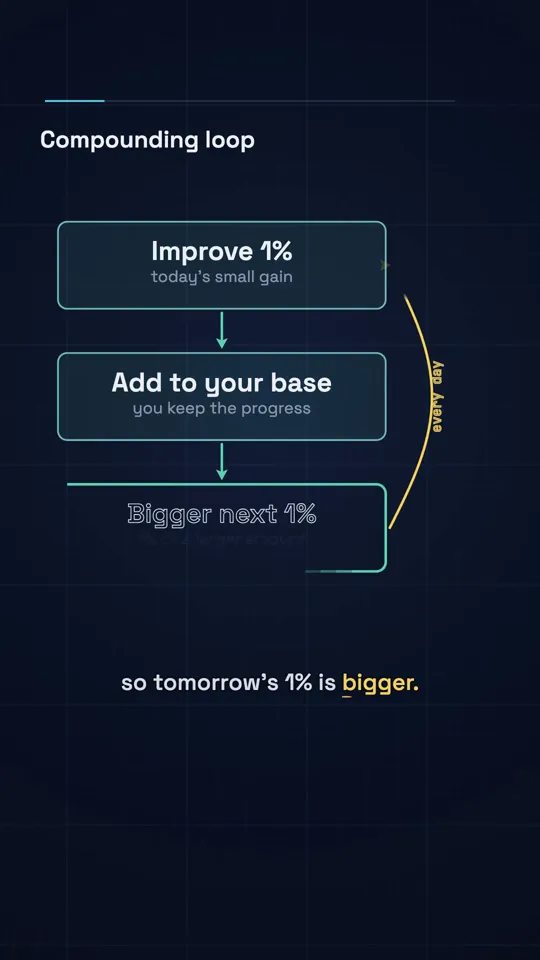
Diagram explainer · 41 s
Where Video Studio fits
WhatToUpload's Video Studio turns a topic into a finished vertical video in about 3 minutes: it writes the script, draws every frame as code, voices it and burns in captions inside the safe zone, so the same MP4 works as a Reel, a TikTok and a Short with no watermark. Styles live today are Kinetic type, Ink stickman and Diagram explainer; you can see more on the faceless video generator and YouTube Shorts maker pages, and the free helpers on tools.
Auto-posting to YouTube is live for testers. Instagram and TikTok posting is coming, so for now you download the file and post it yourself, which is the clean-copy workflow above anyway. Plans are $19, $49 and $99 a month. You get 10 free credits at signup, enough to try the script tools but not a full video, and a 30 second video costs 26 to 30 credits.
Sources and methodology
Platform behaviour comes from Instagram's, TikTok's and YouTube's own documentation and statements, checked in November 2026. Third-party studies are listed with their sample and method, and treated as starting points for your own testing rather than rules. Creator figures from posts on X are the creators' own claims.
- 01Instagram Help Center: reel lengthReels up to 20 minutes; over 3 minutes not recommended to new audiences. Read November 2026.
- 02Instagram Help Center: originalityWhat counts as original; watermarks, borders and same-language subtitles do not.
- 03Instagram Help Center: reels shown less oftenWatermarks, logos, borders, low resolution.
- 04Instagram creators FAQThird-party watermark may impact reach; 3 minute recommendation limit.
- 05Meta Transparency Center: Instagram Reels system cardUpdated 11 November 2025.
- 06TikTok Support: how TikTok recommends contentInteractions weighted most for the For You feed.
- 07TikTok Creator Academy: originality policyUpdated 26 September 2026. Visible watermarks from others are unoriginal.
- 08TikTok Creator Academy: Creator Rewards ProgramEligibility and the eight countries.
- 09YouTube Help: Shorts search and discovery tipsRanking signals; Shorts do not hurt long-form; no minimum cadence.
- 10YouTube Help: Shorts up to 3 minutes and copyright claimsShorts over one minute with a claim are blocked globally.
- 11YouTube Official Blog: YouTube Partner Program changes for 202710 August 2026.
- 12YouTube Help: Shorts monetisation policies45% share, music allocation, non-original Shorts.
- 13Metricool: short video report 20266,177,375 videos from 375,462 accounts, 26 August 2026.
- 14Socialinsider: how long are TikTok videos8,000,795 brand videos, January to June 2026.
- 15PIB: Government blocks 59 apps including TikTok29 June 2020.
- 16Pew Research Center: 8 facts about Americans and TikTok2 March 2026.
Frequently asked questions
Which is better for beginners: Reels, TikTok or Shorts?
For fast feedback from strangers, TikTok where it is available, or Instagram trial reels. For building a community, Reels. For long-term earnings from views, YouTube Shorts. Most beginners should post the same idea to all three as clean copies and let the analytics decide.
Can I post the same video on Instagram, TikTok and YouTube Shorts?
Yes. No platform says it penalises your own original video appearing elsewhere. Upload a clean export to each, without another app's watermark, and write a caption for each app.
Does a TikTok watermark hurt reach on Instagram Reels?
Instagram says so directly: its creator FAQ says a third-party watermark may be impacting your reel's reach, and its Help Center lists reels with logos or watermarks among those shown less often.
Does YouTube demote Shorts with a TikTok watermark?
We found no official YouTube statement saying so. YouTube's rules target re-uploading other people's content and mass-produced content. Remove the watermark anyway, because it makes your video look like a re-upload.
What is the maximum length for Reels, TikTok and Shorts?
As of November 2026, Instagram allows reels up to 20 minutes but recommends only those up to 3 minutes to non-followers. YouTube Shorts can be up to 3 minutes. TikTok's own pages say web uploads up to 30 minutes in one place and 60 minutes in another.
Which app pays the most for short videos?
It depends on your country. YouTube Shorts shares ad revenue (45% of your allocation) in many countries including India. TikTok's Creator Rewards Program pays on videos of a minute or more in eight countries. Instagram has no ad revenue share for Reels but offers Gifts and Subscriptions.
Is TikTok available in India in 2026?
No. It has been blocked since June 2020, and the government said in August 2025 that no order lifting the ban had been issued. Indian creators usually focus on Instagram Reels and YouTube Shorts.